
How do films contribute to a child's education? What is the difference between an educational film and a pedagogical film?
Deciding why and how to use a film with students is the first step in choosing a film for children.
Introducing children to image techniques? Stimulating artistic sensitivity? Enriching a subject studied at school?
Also discover how to find quality short films and the selection criteria for educational films.
Consult our rankings of the best films for children.
First of all, documentary films, but also fiction films can be very educational through their informative content. They allow children to discover new worlds or to take a fresh look at what they already know.
In documentary films, whether they focus on animals, the earth or even history, geography, sciences, music, colors, there are many very good educational films available online.
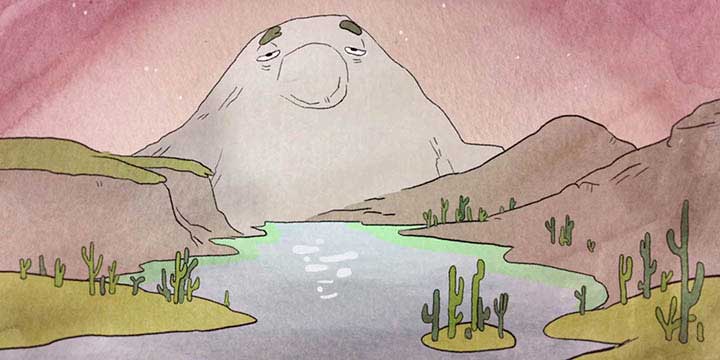
© CalArts. Short film for children by Seth Boyden: An Object at Rest.
If you are looking as a parent or teacher for a free pedagogical film, an original educational film, you will find many clever short films for children on the website of Lumni.
A fresh look at what we know
A quality documentary or pedagogical film allows you to raise young audiences' awareness of topics that are difficult to address in class with students. How can we raise children's awareness about racism and discrimination? How can we talk about disability?
In this context, pedagogical films allow difficult messages to be conveyed in an indirect and entertaining way.

© Olivier Defaye. Educational toys about disability.
A film can also introduce children to the techniques of images and sounds, but the most common discussion about films and pedagogy is in terms of analysis, as a film can be an excellent educational tool and allow a child to learn while having fun analyzing the elements of a film, the themes, the stories, the characters, the narrative techniques.
Building an educational film environment
There are also many teaching materials and very interesting free educational resources available to help teachers use cinema in the classroom, in schools, particularly those from ARTE and from réseau Canopé (films for primary and secondary school students). Analyzing films proves to be fascinating. However, we are not looking to analyze films from this angle.

© ONF. Boogie-Doodle by Norman McLaren, 1941.
What interests us with our selection of children's films, is to bring together a number of poetic and original films whose quality and diversity will constitute an educational environment and a teaching tool at the service of teachers and parents. How can a collection of films contribute to a child's education?
Each film allows children to see our world through the eyes of another, those of the director. The diversity of films, themes, messages, and visual worlds is important for education because it allows the child to develop their own tastes.
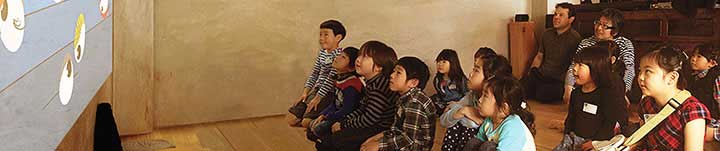
© Films pour enfants. Public screening of films for children
Like books, painting or music, films stimulate children's artistic sensitivity and inspire them to invent and experiment, but films also allow children, from a very young age, to have their own opinion, to know what they like or dislike.
A child, during the different stages of their intellectual development, during phases of distinction between the external world and their imagination, builds their own vision of the world through their real experience with things but also through all the scientific and artistic representations of these things.
Seeing our world through the eyes of another
Thus, later on, imbued with the vision and style of different authors, he may also feel the desire to create his own representation, or simply to have his own vision of the world.
Films stimulate children's artistic sensitivity
It is through contact with children in a kindergarten classroom that one realizes how unique each child is. And yet, adults tend to resemble each other. Today, the supremacy of feature films (a very restrictive format), the narrative and visual uniformity of blockbusters, the stereotypes of heroes, do not allow children to discover different worlds. It's as if we only had children listen to nursery rhymes; it would be a shame not to introduce them to other musical genres from an early age.
Short films are very appropriate for students under 6 years old because they capture children's attention. The varied, original universes far from the stereotypes of short films encourage wonder in the child and support them in their artistic and cultural education.
Films that address subjects that children study in class are also wonderful educational tools; they offer a different perspective and provide teachers with a new tool to enrich their lessons.
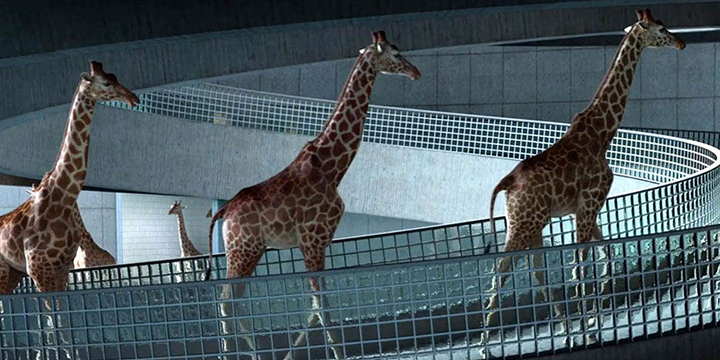
© Cube Creative. Short film by Nicolas Deveaux: 5 mètres 80.
The integration and use of films in school stimulate the imagination and artistic sensitivity of young children.
Films support the child in their education
They invite the practice of other forms of visual and plastic expression such as drawing, modeling or dance and contribute to artistic practices in the classroom, but they can also serve other areas of learning such as civic and moral education, discovery of the living world.
We have created, for this purpose, some themed short-film programs for kindergartens but also themed programs of animated films for school children in general, such as dance, music, but also ecology, forests, water.