
Share teaching and educational experiences
School plays a role in constructing a personal view of animated images. A critical eye for these images can be developed by raising awareness of moving images through encounters with various works from the age of 3 onwards. By exploring animated short films in depth, the teacher helps students develop their creativity as well as an active way of looking at moving images.
What is the place of animated images in schools today?
What is at stake, educationally, in working with film?
What is the teacher's role in working with films?
A critical look at the images
What tools do children have to make sense of images rather than simply being subjected to them?
How can we help them make the images their own, with an active eye?
Each teacher has a personal approach. You too can share your experiences with films and your activities with children.
In her Master's dissertation (MEEF teacher-training programme), Marjolaine Rouzeau analyses her experience with her nursery class (children aged 3 to 5) and explores how animated films can be used in teaching, drawing on the film "Bottle".
Download Marjolaine Rouzeau's dissertation.
Short film about an impossible friendship directed by Kirsten Lepore.
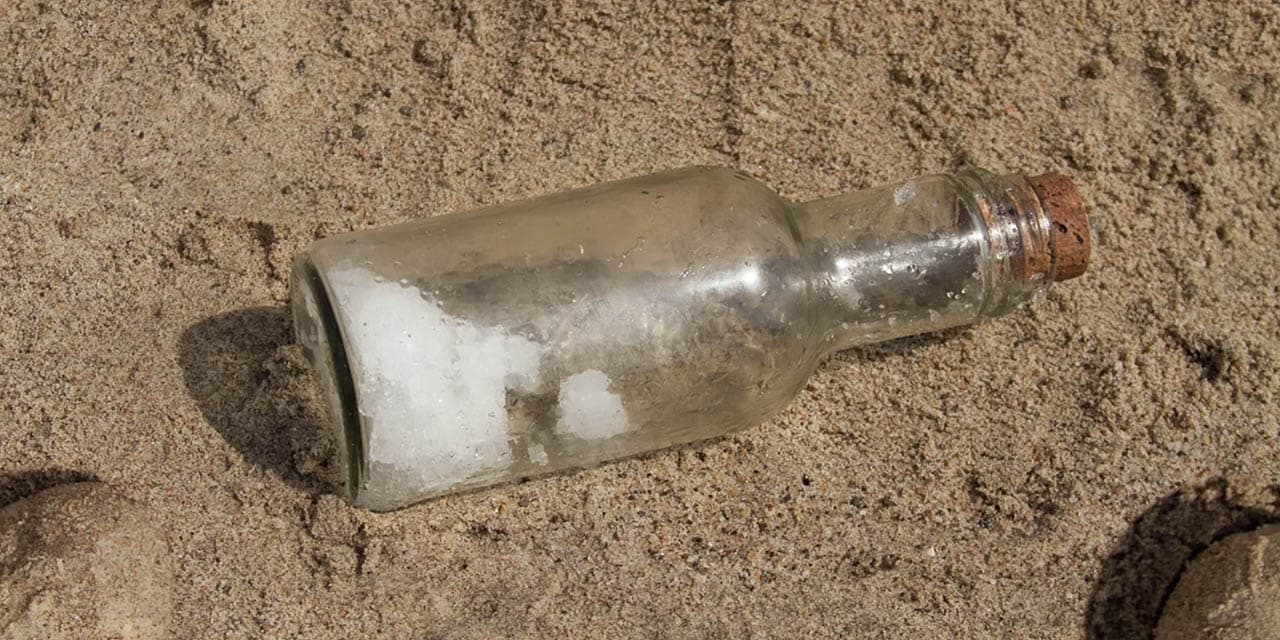
© Kirsten Lepore: Bottle.
A sandman and a snowman communicate by exchanging objects using a bottle transported from one shore to the other by the sea.
After several such exchanges, they decide to set off, each from their own shore, to meet underwater... but the sand and snow dissolve in the water and the two figures vanish before they can meet.
In her dissertation, Marjolaine presents the different sessions on understanding and draws a parallel between understanding the meaning of a film and the study of a picture book in literature lessons. This draws on spoken language, sometimes written language, and visual language, together with the language of sound.
From the short film, Marjolaine sets up three activities, a science activity on dissolution, a speaking activity: a "philosophy café for children" (goûter philo) on the theme of friendship and a written language activity: a pen-pal letter exchange with the neighbouring nursery class (children aged 4 to 6).