Luminaris tells a fairly simple story, where the hero aspires to escape the rigid frameworks of his environment.
His hopes suddenly fail, but he sees the obstacles fall and makes his dream come true, thanks to the help of the female colleague he spent time around without paying her any attention. The final kiss confirms the model of romance, except (but this is perhaps not trivial) that the male/female roles are reversed here.
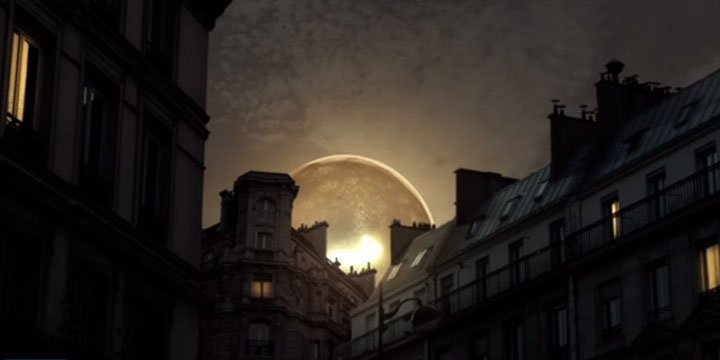
The interest of the film is in the astonishing environment in which this slender plotline is placed. Luminaris describes a world where life is regulated by sunlight and where this rhythm is associated with conformism and standardization, through visual references to the era of triumphant Taylorism. This paradoxical choice (natural light is usually valued) is in a certain way reinforced by the idea of a technique as magical as it is natural, which allows objects to be shaped by chewing the raw material and brought to life with a wink of an eye.
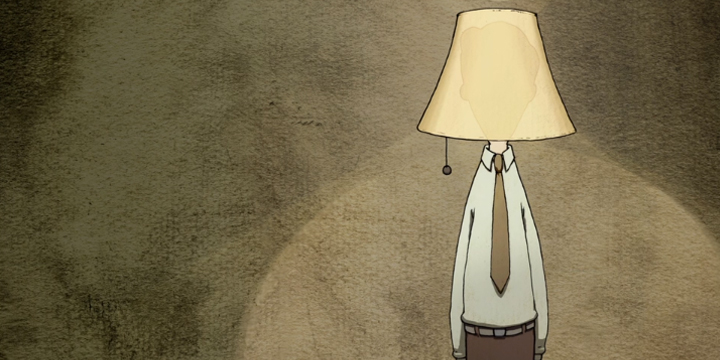
In this environment, the hero's dream is an enlarged technical object, perfected to the point where it exceeds all conceivable standards. It is then without logic and can open up to unexpected connections, according to the surrealist aesthetic which silently permeates the film. A light bulb is an airship flying towards freedom.
The film thus seems to tell us that the methods do not matter – calculation and scientific innovation or DIY and accident – only imagination and dreams count. Luminaris not only presents this idea, it actually puts it into practice, using cinema and animation techniques with precision, inventiveness and irony. It is quite natural that it pays homage to the pioneers of the Seventh Art.
Understand the story and themes, express your feelings and develop critical thinking.
1What is the hero's initial situation? What is he trying to accomplish? What are the obstacles he encounters? How does he overcome them?
He works making light bulbs in a factory. He tries to make a huge light bulb all by himself to escape the city. It's a complicated task. He needs materials to do multiple tests, but he is not allowed to take any for himself. He is helped by his colleague.
2What makes the hero special among other workers?
He does not hesitate to defy the factory rules to bring his project to fruition. He seeks to escape the rules to which everyone submits. He imagines another life.
3Why is the foreman, at the end of the film, furious to see the two heroes fly away?
He's angry that he failed to stop them (which is his job)? Is he jealous of their freedom?
4What, in the film, gives the rhythm and order to the working day? How do we see it?
It's the sun. We see objects and people moving forward at the same time as the shadows.
5What is the characters' job? What technique do they use?
They are workers in a factory. They work on the assembly line. Everyone has a specific and limited role. Their technique is more like magic.
6What period of history does the film remind us of?
In the 1920s-1930s, according to the style of architecture. This is the time when this form of work became widespread.
7How do the actors perform? Is it the same as in a usual film?
Their expressions are exaggerated.
8How was the sequence of the journey to the factory filmed?
This technique is called pixilation. Photos were taken at regular intervals in the streets, the actors each time placed a little further forward, exactly following the progression of the sun, thus giving the impression, when put in series, that the actors were sliding following the sun.
9How was the scene where the foreman gets angry filmed?
It’s a series of photographs where the actor takes on a slightly different expression each time and cotton is added to his ears to represent the smoke.