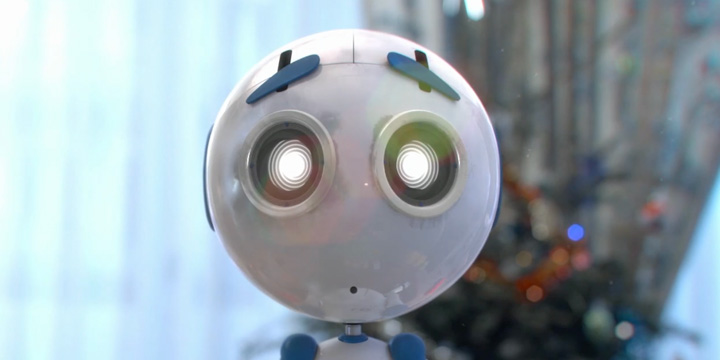
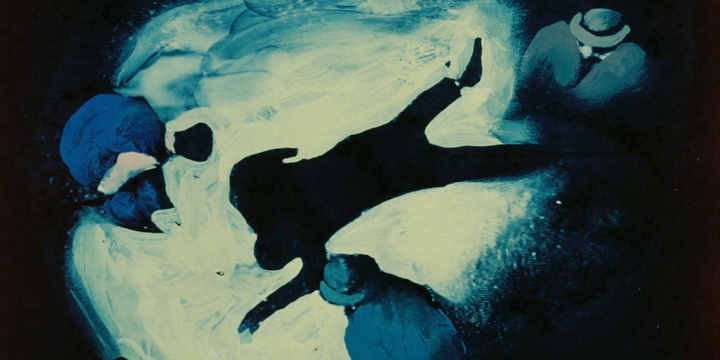
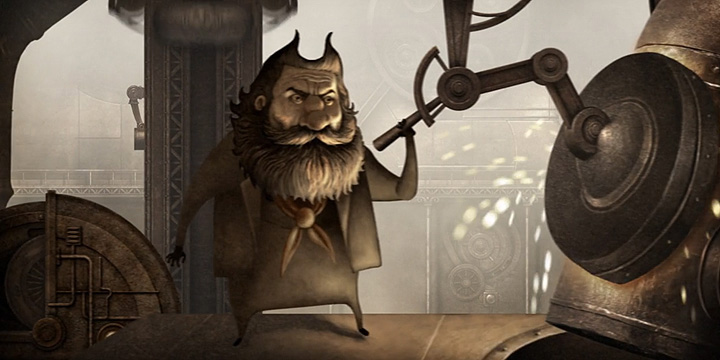
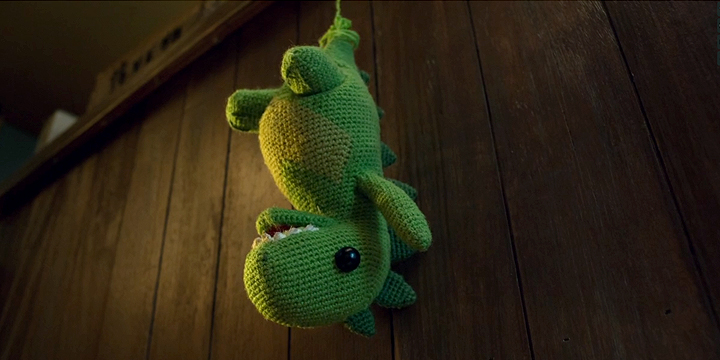
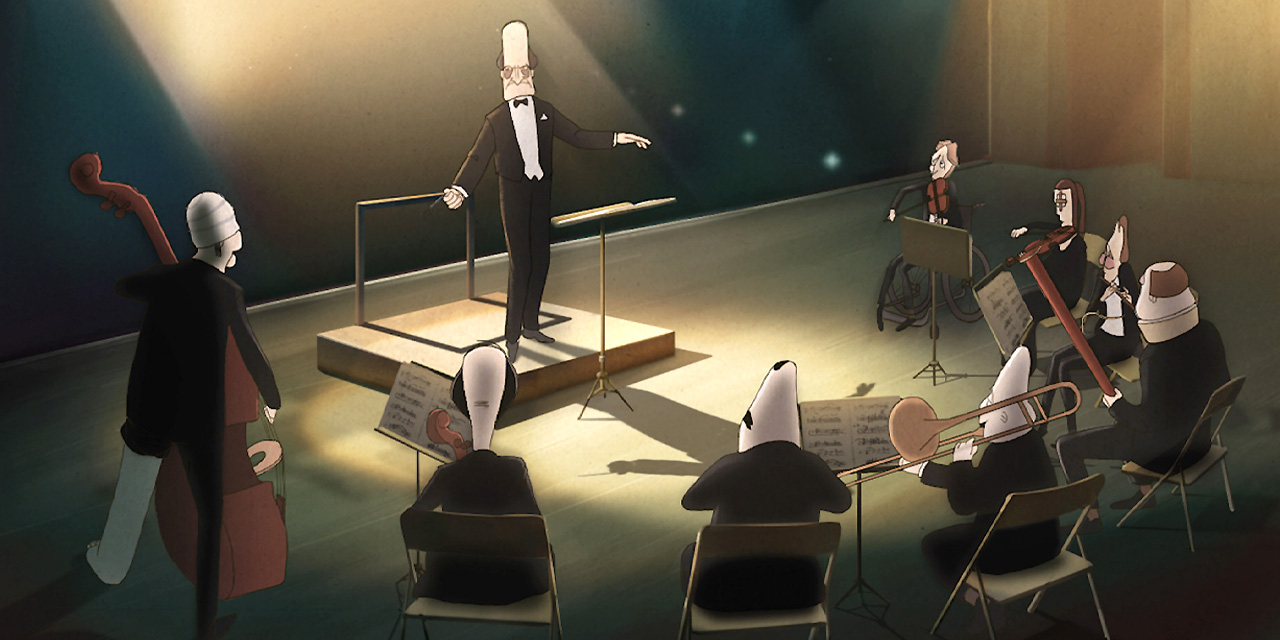
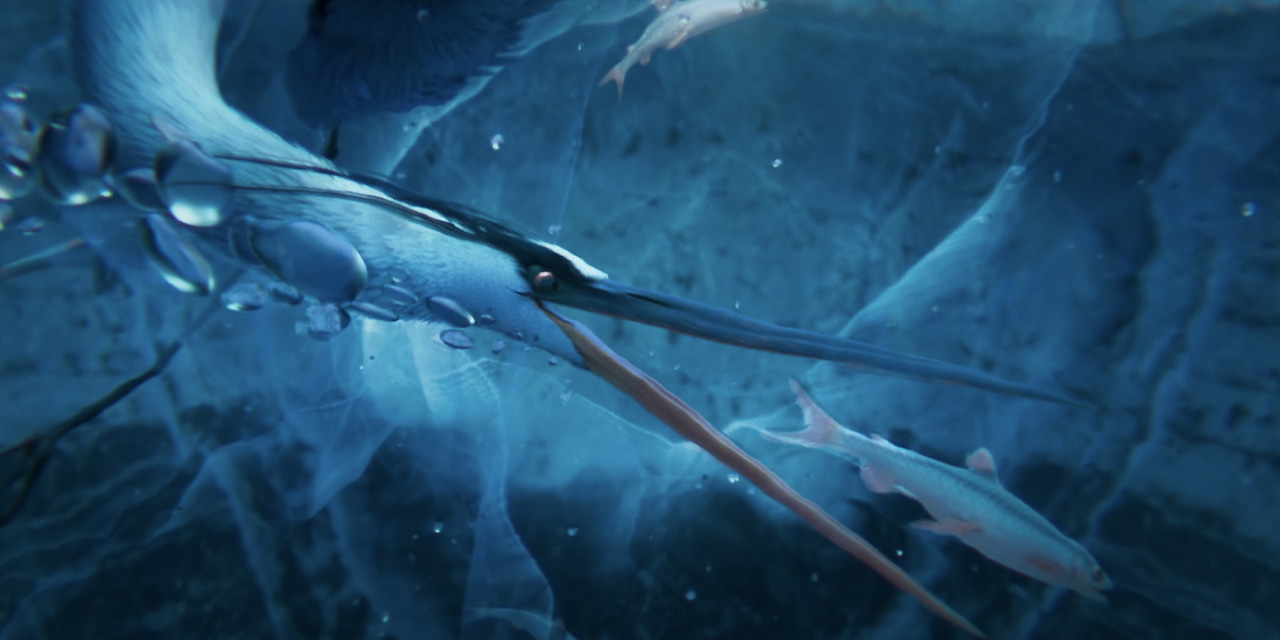
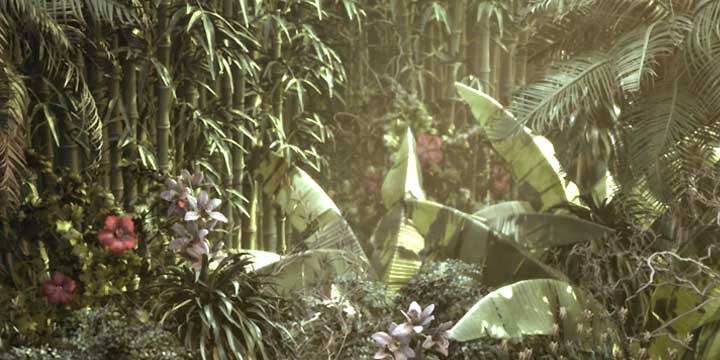
Ray’s Big Idea is a beautiful animated short film that tells the story of Ray, a fish tired of living in an overpopulated primordial ocean. Determined to change his destiny, he dreams of becoming the very first fish to walk on dry land.
Risking his life, he undertakes a journey strewn with pitfalls, leaving the monochrome aquatic depths to discover the technicolor brilliance of a still unexplored prehistoric world. As he evolves, he faces danger, experiences euphoria, encounters a mischievous fly, experiences the vagaries of fame... and even discovers the joys of having legs.
Even if the grass isn't necessarily greener elsewhere, Ray's optimism, courage and enthusiasm remain unwavering.
The short film “Ray's Big Idea” was selected for the Takorama 2023 festival organized by the Films pour enfants association.
1-Who is the main character?
It's an amphibian.
The word "amphibian" comes from the Greek word "amphibios" which means "double life", due to their life cycle which includes an aquatic larval phase and a terrestrial adult phase.
Amphibians spend part of their lives in water and part on land.
Frogs, toads, salamanders and newts are amphibians.
2-Where does he live?
It lives in an aquatic, swampy and crowded environment.
3-What happens in the 40 second before the title of the film?
The character discovers a ray of sunlight which gives him an idea: to escape from his environment and explore the unknown. This makes us think of the evolution of living beings.
4-What is the attitude of other amphibians?
They encourage the main character.
5-What is the character's major physical difference between the moment he emerges from the water and the moment he reaches the top of the cliff?
It has bigger legs, its fins have become feet.
This is reminiscent of the metamorphosis of amphibians.
6-What happens at 1:45 of the film?
He runs into a pole and discovers a town full of people who look like him but have even bigger legs. He is surprised, shocked. He is then pushed by the crowd and thrown onto the grass.
7-Why does he decide to steal?
A butterfly wakes him up and he feels that he too can fly.
8-What is the film's downfall?
The character tries to fly away but fails and falls back among the amphibians.
Back to square one.
Extensions and references
1- Question the world
- Amphibians
Unlike reptiles, mammals and birds which have acquired their independence from water due to the protection of the embryo and fetus in a waterproof amniotic sac, amphibians must lay their eggs in water.
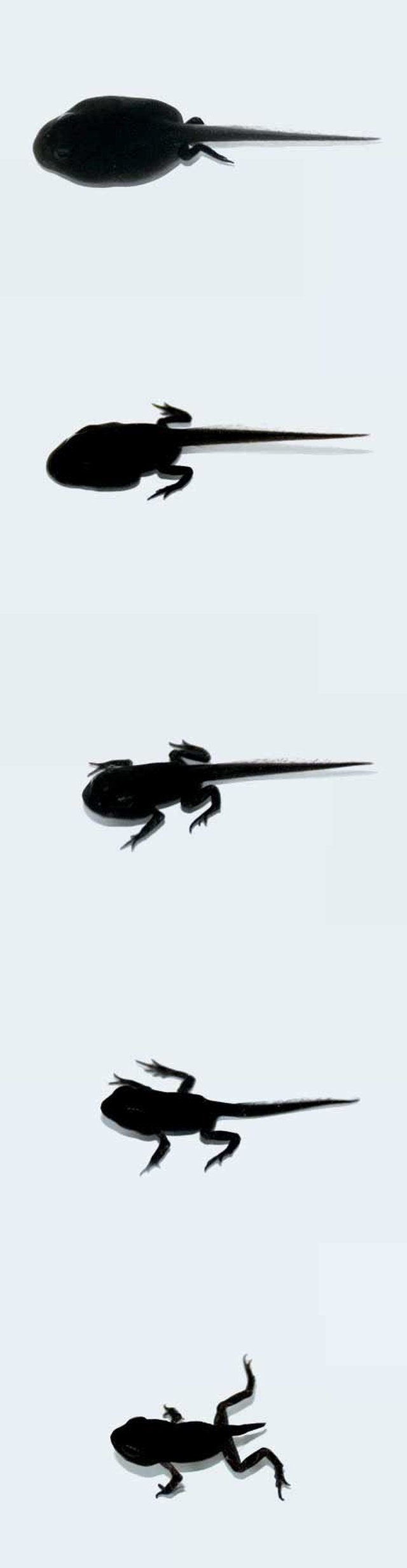
The eggs hatch into small aquatic larvae called tadpoles.
During their development, amphibians metamorphose, they lose their gills and develop lungs, which allows them to live on land and in water.
These changes also include the growth of limbs, such as legs, and the loss of the tail through a process called “apoptosis.”
The speed of these changes depends on water temperature and food availability.
However, they must return to the water to lay their eggs.
Amphibians are “cold-blooded” animals and cannot regulate their body temperature the way “warm-blooded” animals do.
This means that amphibians are dependent on environmental conditions to regulate their body temperature.
- The evolution of species
The film will also be an opportunity to address the evolution of species and natural selection as highlighted by Charles Robert Darwin in “The Origin of Species”, 1859.
Evolution allows a species to survive changes in its environment.
Individuals best adapted to changes survive and reproduce, but if changes occur too quickly, species do not have time to evolve to survive and mass extinction occurs.
Educational activities offered by Bruno Pellier, Christophe and Olivier Defaye.