Educational activity based on the short film Dandelion
« Use scientific methods; imagine and create. »
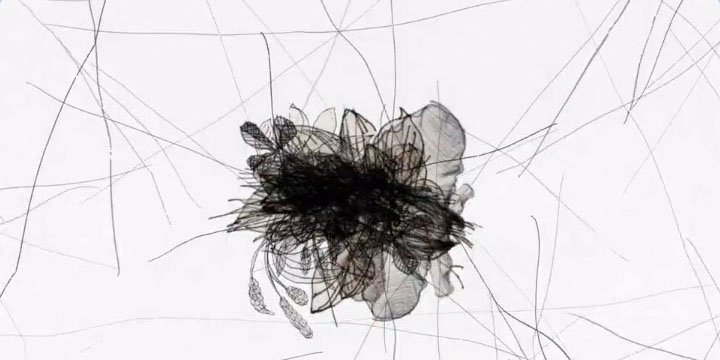
Dandelion © Steven Subotnick
TitleDandelion
ThemeAbstraction
Genre & keywordsExperimental, nature, hope, dream, plants, animals, raw
Age (for the film)3-11 years
Duration01 min 28 s
DirectorSteven Subotnick
ProductionSteven Subotnick (United States, 2014)
The presence of mathematics in nature. Know the characteristics of the living world.
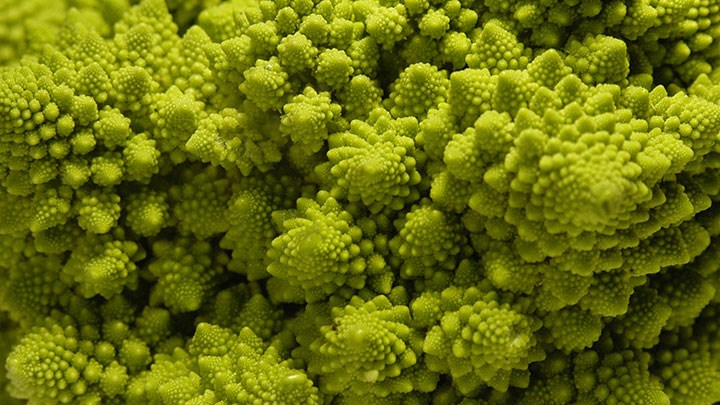
« As they seek to grow efficiently, plants produce complex geometric patterns », crossed spirals, regular arrangements of leaves along the stems, organization of pine cone scales... The relationship between the plant world and mathematics is a complex subject« ; however, it can be interesting to point out to students » aged 6-11 that nature seems to have a predilection for Fibonacci sequence and the golden ratio but also for mathematical objects such as fractal figures. « Plant growth is not random; instead it follows natural laws of distribution. »
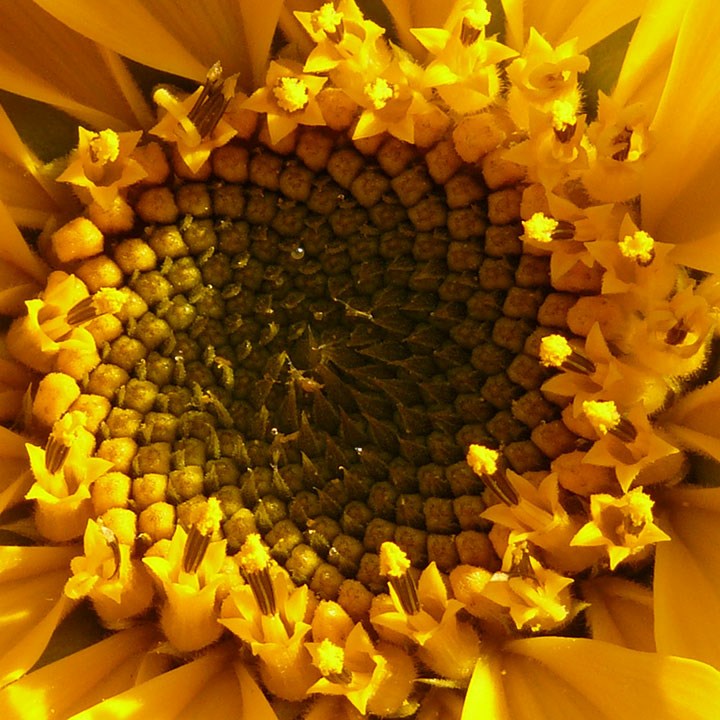
For example, 3 petals for lilies, 5 for buttercups, 34 or 55 or 89 petals for daisies. « The number of spirals in the centre of sunflowers » (spirals in 2 directions) is either 21 and 34, or 34 and 55, or 55 and 89, or 89 and 144. Pine cones have either 8 spirals on one side and 13 on the other, or 5 spirals on one side and 8 on the other. The number of diagonals of a pineapple is 8 in one direction and 13 in the other.
These numbers are all part of the Fibonacci sequence (Leonardo Fibonacci, 1202, Pisa): 1, 2, 3, 5, 8, 13, 21, 34, 55, 89, 144, 233... (each number in this sequence is obtained from the sum of the two previous numbers [0+1=1] [1+1=2] [1+2=3] [2+3=5] [3+5=8] [5+8=13]...).
The inflorescence (from the Latin inflorescere: to flower) is the structure of a flowering plant, the arrangement of the flowers on the stem. The inflorescence is one of the means of attracting pollinators through the group effect it provides. This gathering of flowers generally increases visitation rates and pollinator diversity, because it provides pollinators with a concentrated wealth of more visible resources and easier landing.
Introduce the students to the different types of inflorescences that exist in nature and then ask them to imagine an inflorescence. « Before drawing, a preparatory step will be to put the idea into words »: Why this shape? « How will insects come to gather nectar? »
Activity sheet written by: Christophe Defaye