Educational activity based on the short film De Planeta
« Represent the surrounding world and give shape to your imagination. Show your work and look at that of others. »
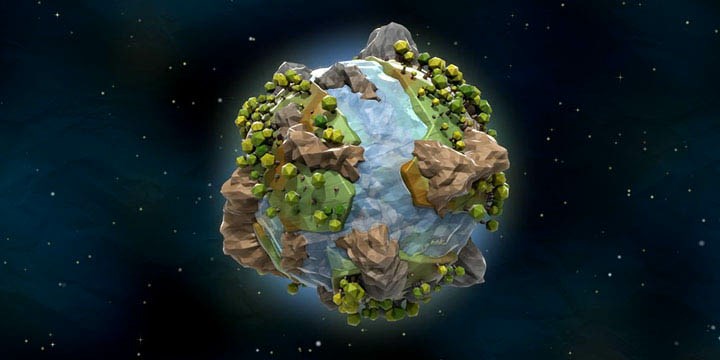
De Planeta © Leonardo Cavaletti
TitleDe Planeta
ThemeEcology
Genre & keywordsMusical, planet Earth, civilization, nature, culture, destruction.
Age (for the film)3-11 years
Duration01 min 56 s
DirectorLeonardo Cavaletti
MusicGioacchino Rossini
ProductionNational Centre for Computer Animation (United Kingdom, 2013)
Understand the difference between environment and object.
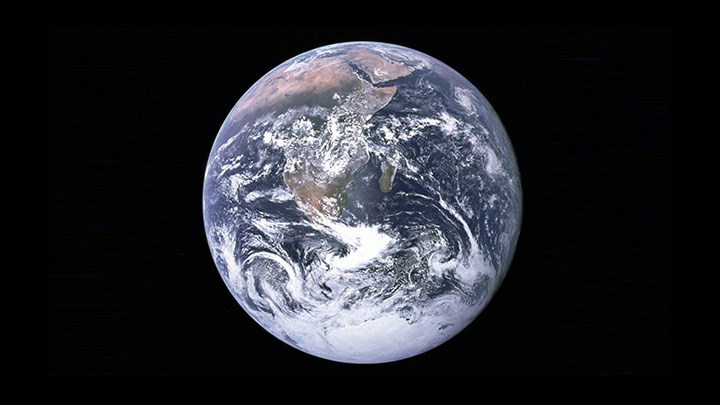
The choice of an exterior view of planet Earth in the short film is fundamental. What is the difference between a context in which we find ourselves and an object that we can perceive in its entirety?
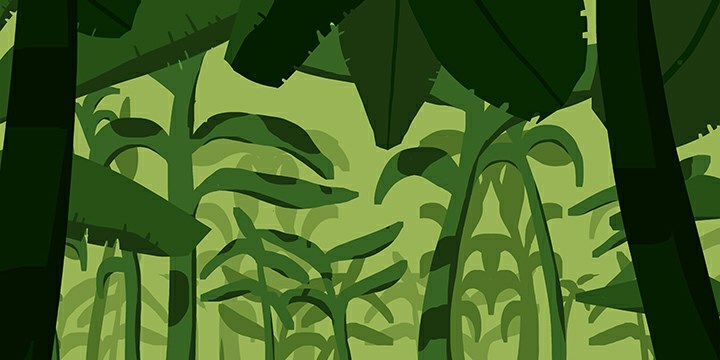
« After comparing the image of the banana forest with that of the potted banana tree, the children can draw a forest of the tree of their choice, then the same tree in a pot. »
Print the materials for this activity...
To illustrate the importance of the point of view, present a text by Michel Serres, who, in the documentary “Tours du monde, tours du ciel”, wonderfully expresses the author's choice to represent the earth in its entirety, as an object that is manipulated, dominated, constrained and abused.
“We are going to recognize ourselves as the privileged image of an astronaut, who, outside the earth, looks at it in its entirety […]. « There is one extraordinary date: the first time we had a photograph of the Earth » […]. The earth does not move for man, it is the ground on which we rest, the house in which we live... the earth is our mother, we cannot leave it […]. It was our house and now it is an object, it was our mother and now it has almost become our daughter, « as if it were in danger because of our actions ». » Michel Serres
“We…”: Who are we talking about? “There is a date…”: « Make sure the children realise that photographing the Earth is a recent event in human history. » “The earth does not move…”: What is the difference between a context in which we find ourselves and an object that we can perceive in its entirety?
Activity sheet written by: Olivier Defaye