Educational activity based on the short film Googuri Googuri
Keep track of an experience.
Use drawing in all its diversity as a means of expression.
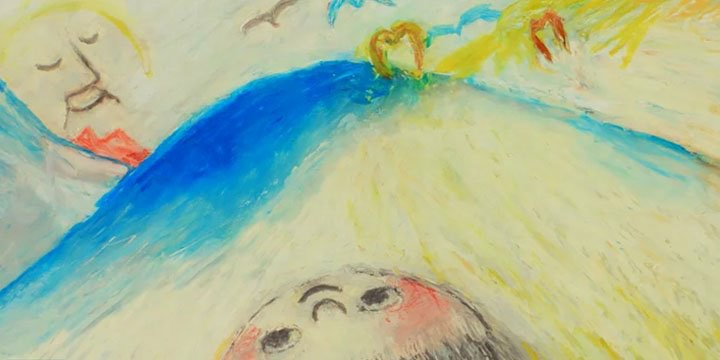
Googuri Googuri © Tokyo University of the Arts
TitleGooguri Googuri
ThemeFamily relationship
Genre & keywordsContemplative, experimental, abstraction, love, friendship, grandfather, granddaughter
Age (for the film)3-11 years
Duration08 min 23 s
DirectorYoshiko Misumi
MusicNatsuko Yokoyama
ProductionTokyo University of the Arts (Japan, 2010)
Describe then extrapolate an observation under a microscope.
At the age when children begin to recognize and classify the elements of their environment more than they discover and question them, it is interesting to introduce the question of curiosity and attention to small details.
Who is interested in the shape of the swirls of mist, the rhythms of the waving of hair when they are stroked? One could answer that (among adults) it is the domain of scientists and artists. But there are obviously broader issues that concern the way we all look at things.
It is therefore a question of questioning both observation and the process of imagination through resemblance.
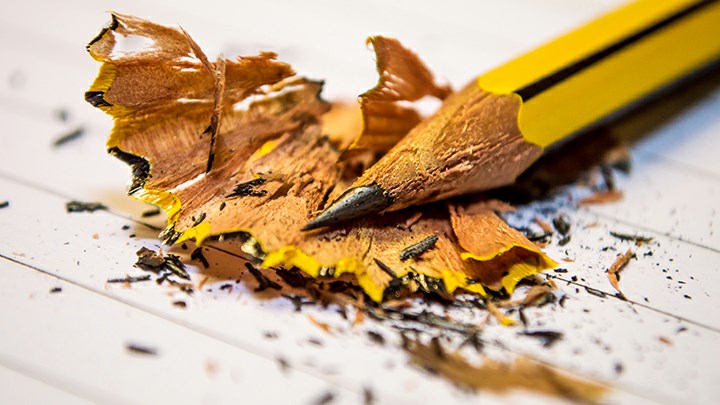
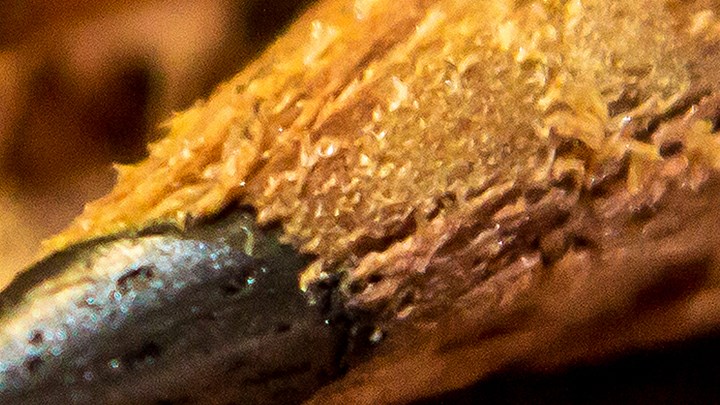
In this activity, we start from the observation of an innocuous element in the students' environment, which will be suggested to them: small pile of pencil sharpener scraps, texture of a plastered wall, skin, fabric, element of a plant, etc. The use of a magnifying tool (magnifying glass, microscope) to carry out the observation will create the “strangeness” motivating the description.
Initially, it will only be a matter of representing through drawing, as accurately as possible, what is seen. This is the truly “scientific” part. Using the same observed object provided to the students, it may be interesting to compare, at this stage, the different drawings produced.
Secondly, the children may be invited to make a second drawing, based on the first, following an intuition linked to the shape that they read in their drawing making them think of something completely different (another object, landscape, etc.). The teacher can give direction or, if it works, let the children choose).
It involves choosing a plastic particularity (shape, color, arrangement) common to another object or another space and accentuating it. We can imagine using this process to create three, four or more drawings, by progressive accentuation.
We can draw inspiration from more advanced attempts, where scientific images become works of art: The images collected in Coalescence. A scientific imagination, by Élisabeth Bouchaud (2019). Photographs of biochemist Linden Gledhill.
Activity sheet written by: Bruno Pellier