Educational activity based on the short film I think I love you
Implement a text production process.
Identify the characteristics specific to different genres of texts: dialogue.
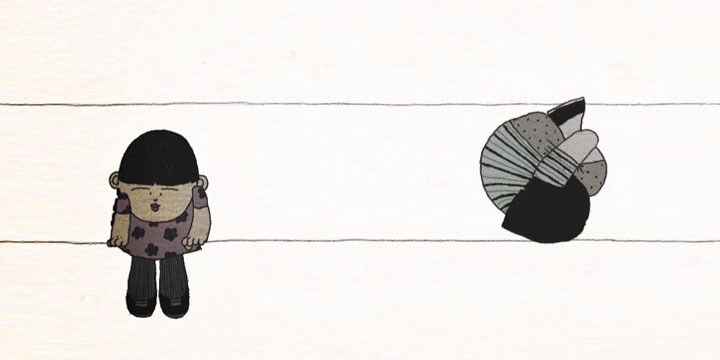
I think I love you © Xiya Lan
TitleI think I love you
ThemeFriendship
Genre & keywordsComedy, meeting, love, human relations, feelings, musical notes,
Age (for the film)3-11 years
Duration06 min 52 s
DirectorXiya Lan
MusicKaren Tanaka
ProductionCalarts (United States, 2017)
Write the dialogues between the characters.
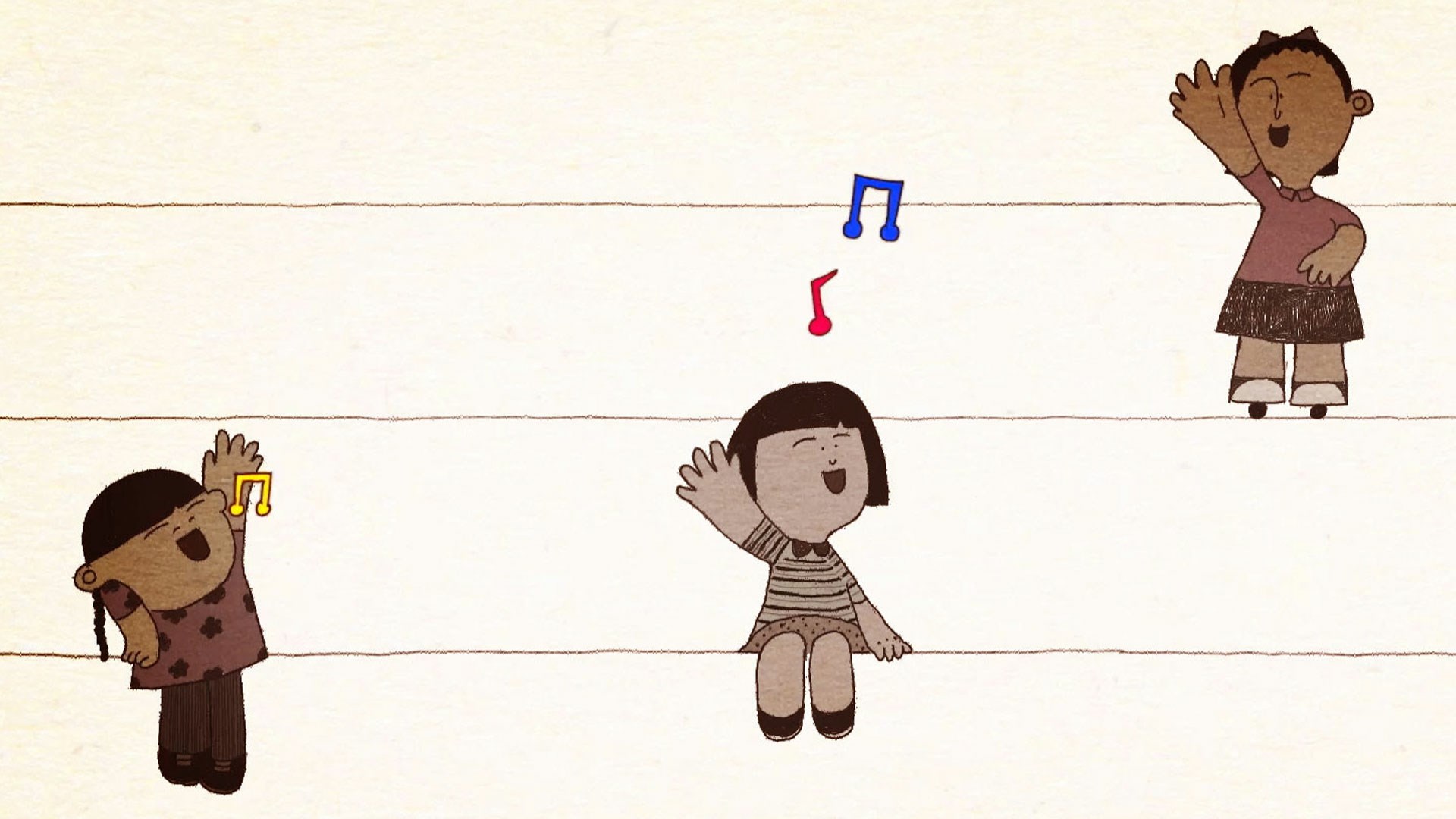
This short film is very original. We see small characters moving to a musical staff. We discover at the end of the video that they are the fruit of the imagination of the songwriter who is in the process of composing his music and writing his song. We assume that the title of the video “I think I love you” is also the title of the song he is writing. Indeed, love is the theme of his song. She talks about the different ways of loving (maternal love, friendship, love within a couple)... and the emotions that we can feel in love (happiness, sadness, anger...).
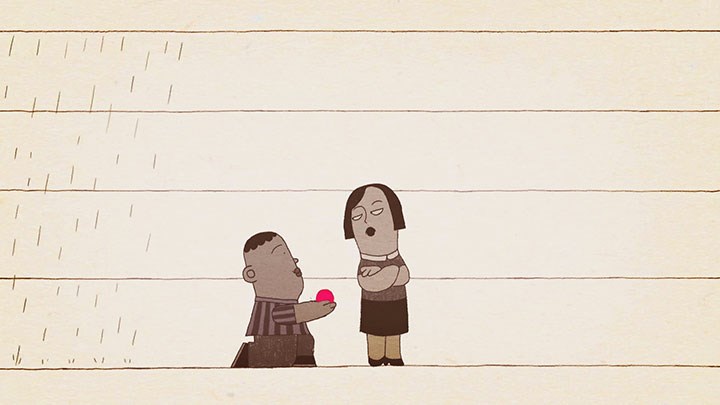
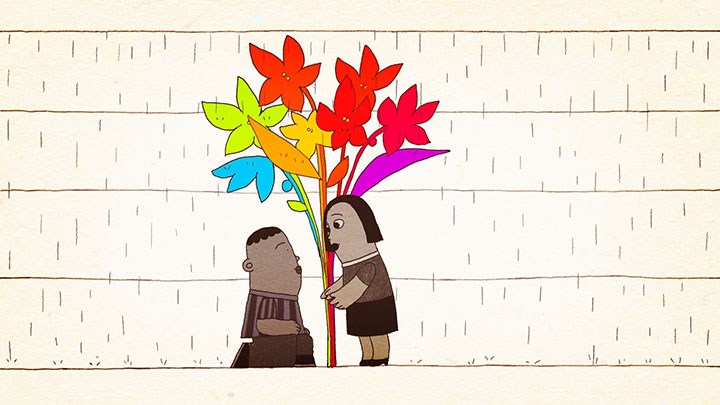
This video is also complex for children to understand. We will have to work on the meaning, plan several viewings, a preliminary step before moving on to writing the dialogues. At the 34th second, for example, we see parents scolding their child; then we see him grow up, which means that we find ourselves a few years later when he is a teenager, his parents have aged, and there he is the one who gets angry with his parents! At 3 minutes 18 seconds, we see a couple who are visibly going through a crisis. The man rejects her, then takes her back, then rejects her... The woman ends up leaving and forming a relationship with another. Except that she in turn rejects him when he changes his appearance (it seems that he has gained weight!). At 4 minutes 22 seconds, we see a little couple who love each other so much that they "drink" each other's words, then argue... and reconcile!
Other prerequisite: Work on dialogue. If this has not been done before, it is important to analyze a dialogue while reading, to identify and understand the punctuation marks in the dialogue, the hyphens, the quotation marks, etc.
Then we will offer them oral work. Show them an image from the film (freezing the image). Ask them to describe what they see and imagine the dialogues between the characters. Repeat the exercise once or twice until the children understand the instructions.
Finally move on to writing. Offer several images to the children. Below they will have to write the dialogues between the characters.
Print the materials for this activity...
Everyone will then be able to present their work. We can compare the different dialogues written for the same image.
Activity sheet written by: Valérie du blog Val 10. Discover the Val 10 blog...