Educational activity based on the short film One Small Step
Recognize basic emotions, know the vocabulary of emotions.

One Small Step © TAIKO Studios
TitleOne Small Step
ThemeMemory, Family relationship
Genre & keywordsNarrative, rocket, astronomy, perseverance, father, daughter
Age (for the film)3-11 years
Duration7 min40 s
DirectorAndrew Chesworth & Bobby Pontillas
MusicSteve Horner
ProductionTAIKO Studios (China, 2018)
Learn about primary and secondary emotions: understand that the same emotion does not always have the same intensity. Enrich your vocabulary of emotions.
Watching this short film allows you to identify the different emotions experienced by the main character. Pupils are led to name them and notice their varying intensities.
Session 1: Retelling the story
Have students watch the short film. After this first viewing, ask them to identify the characters (a girl and her father) and to tell the story in their own words. Generally, children naturally recount how the story unfolds, step by step. If not, guide them to summarize the plot chronologically.
Ask the children what they felt during this first viewing. It is a very moving film with a child as its heroine, which allows students to easily identify with the character.
Session 2: Identify the character's emotions
Go over the main stages of the story with the students (see session 1). Have the students watch the film a second time, with instructions to pay particular attention to the emotions experienced by the girl throughout the story.
Gather the emotions the students have identified (on a poster for example). Ask them to contextualize, using questions: At what point in the story does the character feel this emotion? Why? How did you identify it? It is likely that students cite the same emotion several times to designate different images. The best-known primary emotions will be cited: joy, anger, sadness, surprise, fear. Students will refer to facial expressions (shape of the eyes, eyebrows, mouth) or body movements (jumping, running, laughing, etc.).
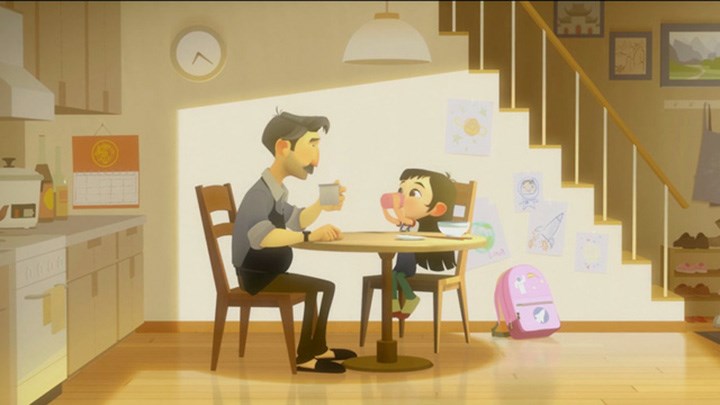
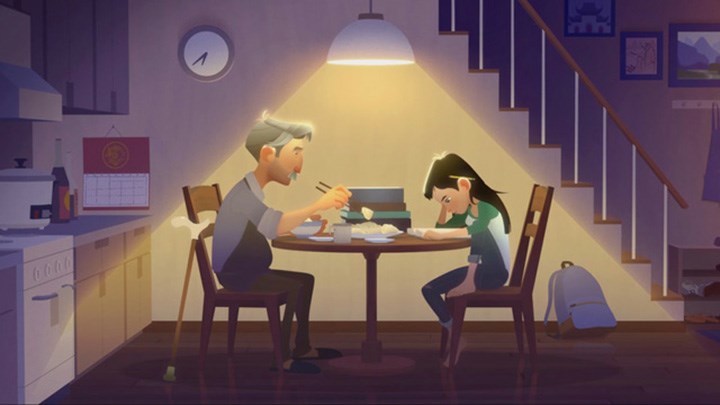
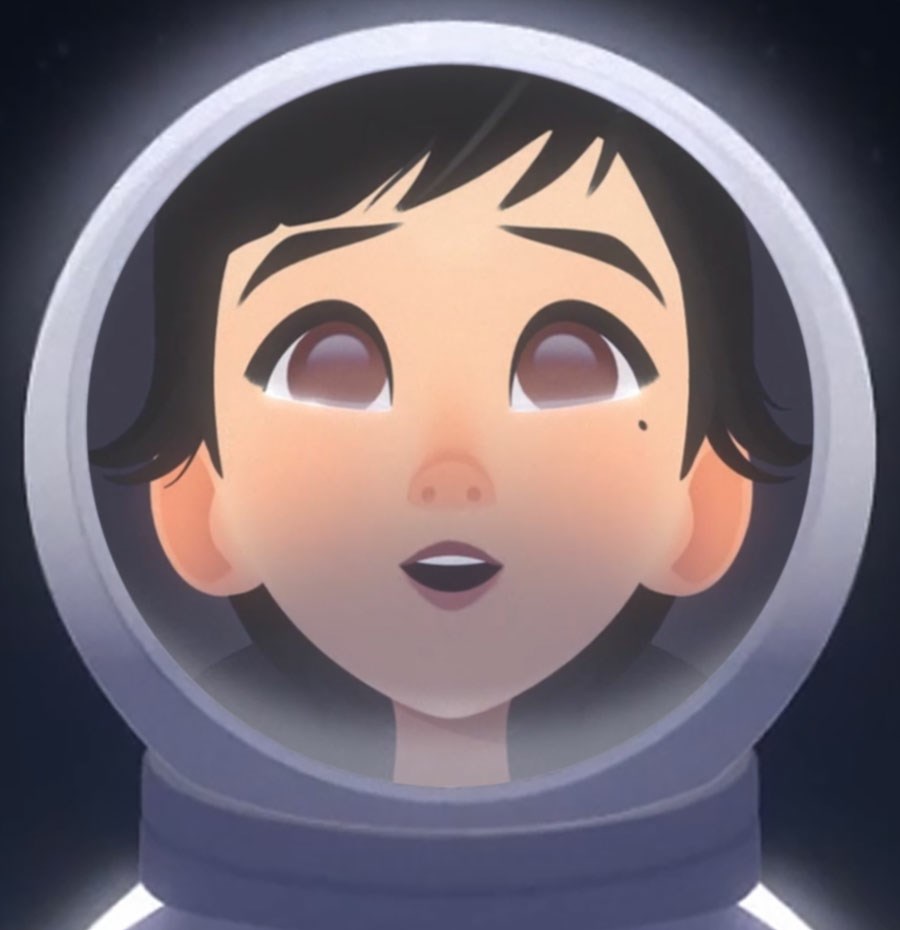
Ask the students to observe a series of images from the film and sort them into 5 groups which reflect the primary emotions: joy, sadness, anger, fear, surprise. The teacher will have prepared 5 posters on which images of related emotions will be pasted. N.B.: Depending on the age of the students, we can adapt the number of images/emotions studied. Once this sorting has been carried out, point out to the students that there are nuances of intensity between the emotions
grouped together on the same poster (e.g. enthusiasm / joy / euphoria). At this point, the students can mime the emotions. Based on this observation, ask the students to find more precise names of emotions to caption each image. Specify that the same name cannot be used several times. This therefore leads to expanding the lexicon with less used terms: disappointment, discouragement, etc. At the end of the activity, the teacher provides (or has people guess from known words or expressions) the lexicon corresponding to the images which could not be captioned.
Session 3: Appropriate the lexicon of emotions
Beforehand, the teacher will have created a set of dominoes with the images from the film and the names of the emotions. Prepare one set for every 6 students. Invite the students to play a game of dominoes. We can also offer them the opportunity to play at other times of the week, by leaving the games freely accessible in the class.
Written record: Hand out to the students a sheet of images from the film grouped by type of emotion. Ask them to caption the images with the names of the emotions studied. Depending on the age and level of the students, we can provide a series of labels containing the names of the emotions.
Activity sheet written by: Lutin Bazar. Discover lutinbazar.fr...