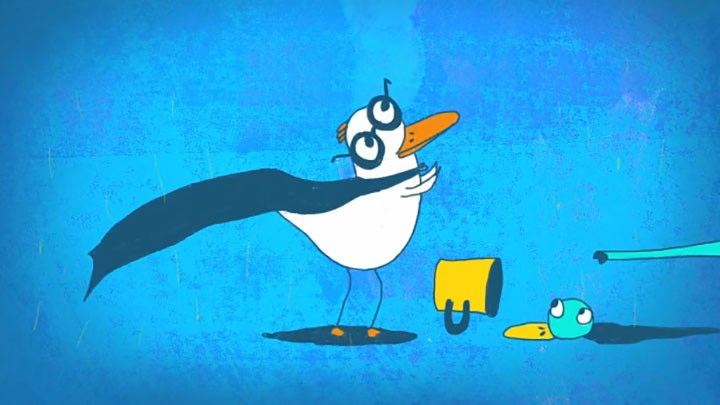
Educational activity based on the short film Patati patacola
Speak so as to be heard and understood.
Patati patacola © Beatriz Carvalho
TitlePatati patacola
ThemeAnimals
Genre & keywordsComedy, childhood, song, animals, duck.
Age (for the film)3-9 years
Duration01 min 39 s
DirectorBeatriz Carvalho
MusicToquinho & Vinícius de Moraes
ProductionBeatriz Carvalho (Brazil, 2013)
Describe what the short film / a scene is about, and rephrase it.
Oral language, far from being a preserve of 3-to-6-year-olds, is a discipline that is still essential for ages 6-9 and even beyond. The situations to work on it can be diverse, varied and all very enriching. If the teacher must ensure that his students are active during verbal exchanges and express themselves in an understandable manner, he also has the heavy responsibility of implementing teaching sessions specific to this area. The short film proposed here will allow your students to reformulate a story orally and will force them to produce clear, coherent speech.
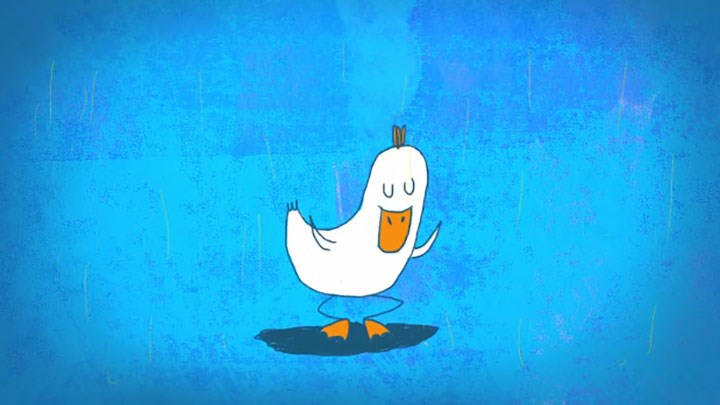
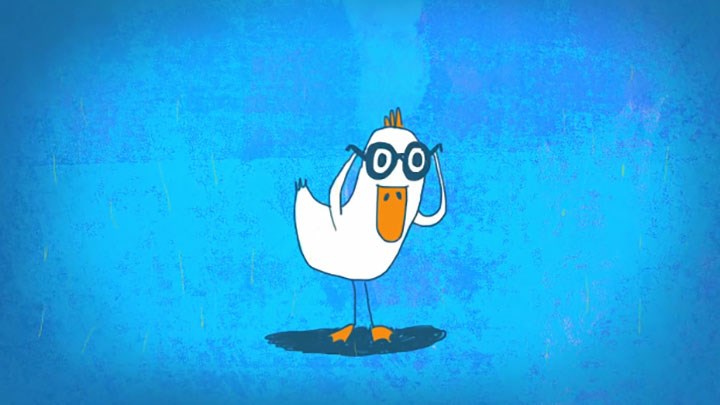
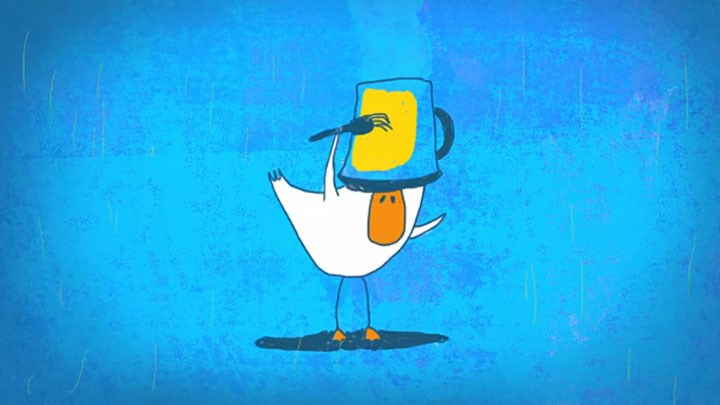
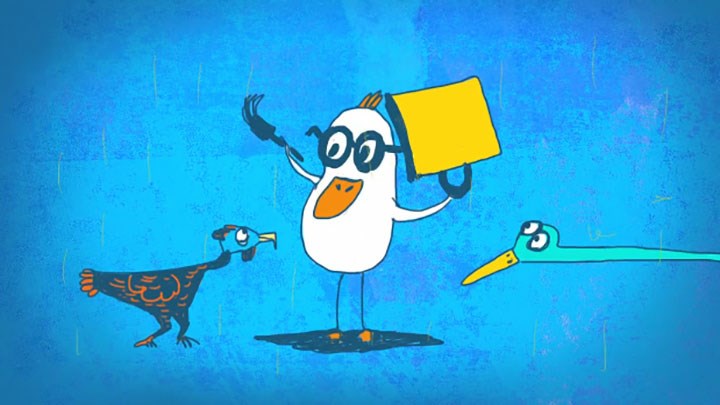
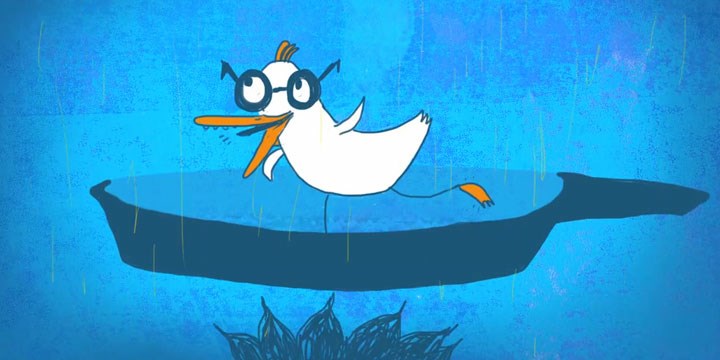
By following the adventures and misadventures of a little dancing duck and after struggling themselves to understand its story told in a language they don't understand, the students will have to fulfill a major mission: to make the story understandable for everyone. In order not to risk putting future viewers of this little duck in the same situation as them, they will have to pay attention to their speech, their diction, etc. to offer others an entertaining short film which will leave no room for doubt.
Activity steps
1- Watching the film in its entirety (without sound!)
2- Gathering students' reactions and questions
Post the “Memory Labels” on the board as the students mention them and bring in any they may have forgotten. Point out to students that it is difficult to reformulate this story because there are many things happening in it that are not really related to each other.
3- Second viewing of the short film with sound
Ask students why we hear a child’s voice. After collecting their answers, tell them that this short film is in fact the depiction of a story invented by a little Brazilian boy. One day he told a story to his mother who made this little cartoon out of it.
4- Research Tell the students that this story is difficult to understand orally because the child does not speak French. Tell them about their mission: to create a new soundtrack for the short film so that it is accessible to everyone in the school.
NB: This phase can take place in different ways:
The students formulate their sentences to describe the adventures of the little duck and keep a record of them: Either in writing (in the draft notebook, on one of the suggested worksheets, etc.).
Either orally (by recording themselves on a dictaphone, a smartphone voice recorder, etc.).
5- Sharing (can be done in a later session) In the case of collective work: the students listen to their entire oral story (reading by the teacher, by a student, listening back on the dictaphone, etc.). In the case of group work: each group takes turns at the board to present their oral formulation in front of the class, while the short film plays alongside.
Possible extension
Activity sheet written by: Maîtresse Aurel. Discover Maîtresse Aurel's blog...