Educational activity based on the short film Pictor Cochlea
Use scientific methods of inquiry.
Use different forms of representation (text, diagrams, tables).
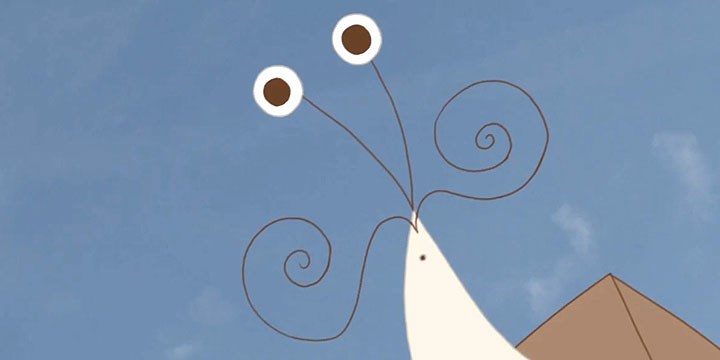
Pictor Cochlea © ECV
TitlePictor Cochlea
ThemeAnimals, Painting
Genre & keywordsComic, drawing, snail, hallucination
Age (for the film)3-11 years
Duration2 min 30 s
DirectorIsabelle Arné & Laetitia Meynier
MusicLöhstana David
Production2010 (France, 2010)
Observe an animal and hypothesize about its body parts.
If in kindergarten students are encouraged to observe and question the world around them, at 6-9 years old, they are encouraged to go further by carrying out a more thoughtful scientific approach. The living world is a domain where students can easily observe, question and “do some detective work”.
In this short film, a little snail wandering around a painter's window ends up thinking of itself as an artist. Although this snail displays emotions and reactions close to those of human beings, it retains all the characteristics of small gastropods.
If the proposed activity can work as a one-off lesson, it will nonetheless be even more worthwhile in the context of a longer project (snail breeding) which will allow students to carry out a substantial investigation and to compare their hypotheses with research findings, and their drawings with reality.
Activity steps
1- Watching the film in its entirety
2- Gathering students' reactions and questions
3- Second viewing of the short film with sound
4- Research After the students have observed the short film and the snail, present them with the activity sheet. NB: if a snail farm is already present in class, let the students observe it a little to facilitate research.
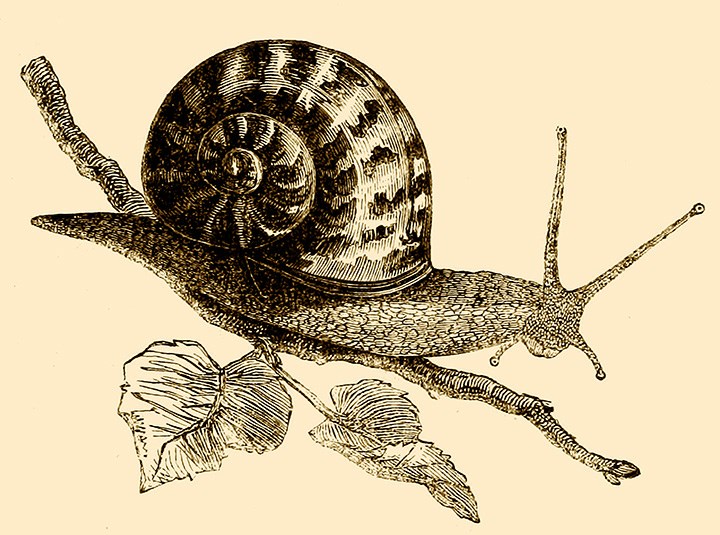
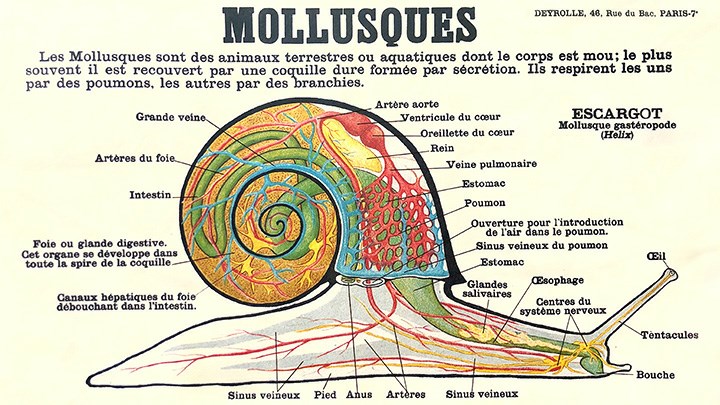
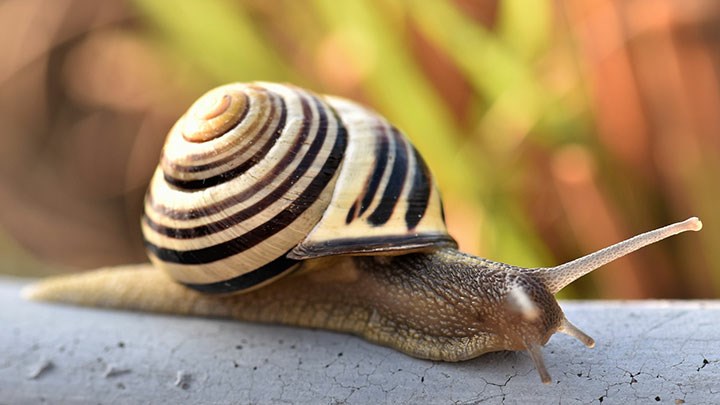
On this sheet you will discover different views of the snail. Each photo shows you parts of its body. Your job is to try to name each body part and its function. Let the students search (individually or in groups).
Print the materials for this activity...
5- Pooling As part of a single session, listen to the proposals of the different groups and give students the answer using reference (non-fiction) books. As part of a longer project, collect the students' collective oral responses on the proposed "memory" poster, also keep the individual (or group) activity sheets to be able to return to them at the end of the sequence in order to validate the students' hypotheses at the end of the sequence.
Possible extension
Activity sheet written by: Maîtresse Aurel. Discover Maîtresse Aurel's blog...