Educational activity based on the short film Piok
Recognize, name, describe and reproduce geometric figures and shapes.
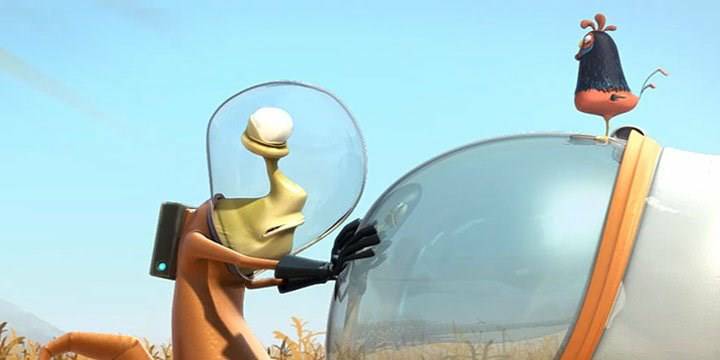
Piok © ECV
TitlePiok
ThemeAnimals, Extra-terrestrial
Genre & keywordsComical, farm, hen
Age (for the film)6-11 years old
Duration3 min 34 s
DirectorTheo Dusapin & Clément Dartigues
MusicPascal Dusapin
Production2012 (France, 2012)
Recognize, name and represent geometric shapes. Use a compass, draw circles, compare and measure distances.
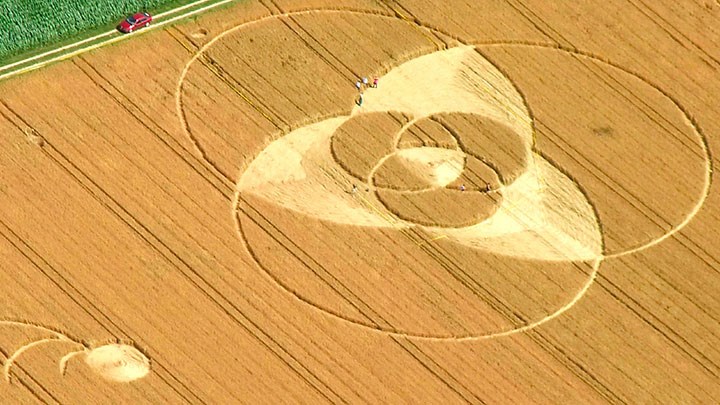
Following the viewing, the students will wonder about the last image of the short film. What is this strange drawing in the wheat field? What does it represent? Who could have drawn it? And in reality, have they ever seen this type of drawing in a cereal field?
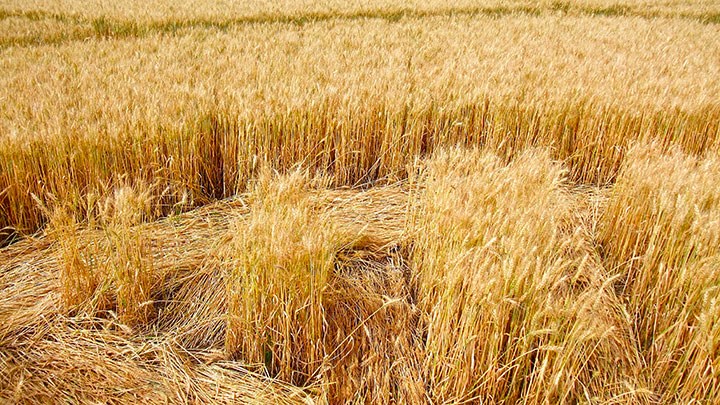
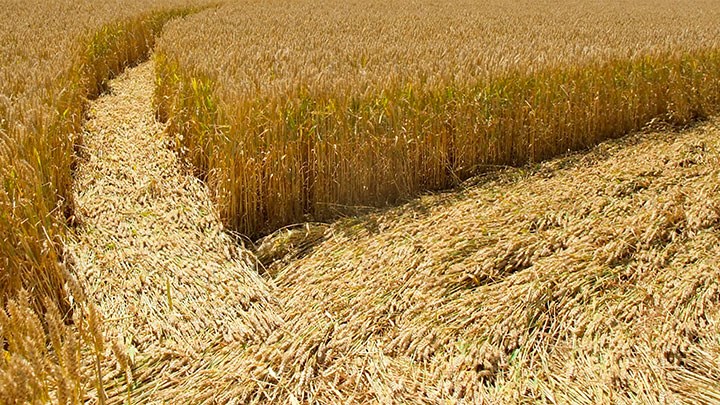
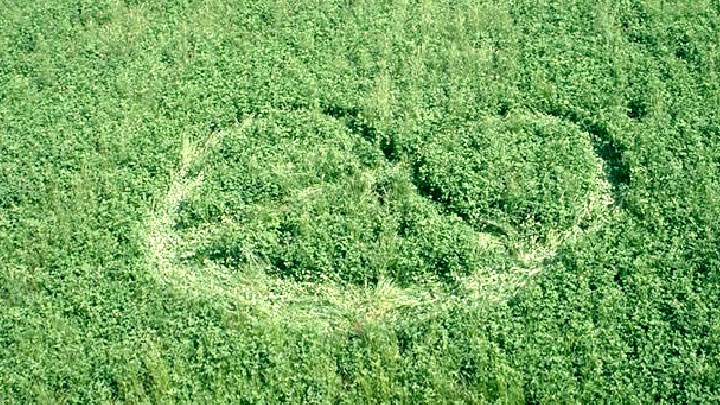
What do we call this? This is called “crop circle” or “crop circle”. A crop circle is a geometric pattern made in a cereal field. Visible from the sky, these creations can range from a simple circle of a few meters in diameter to compositions of several hectares. These geometric patterns are made by flattening the cereal stalks against the ground but the makers do not always claim authorship and some paranormal enthusiasts attribute their origin to supernatural causes, extraterrestrials for example. Following a debate on the origin of these drawings, the students will in turn imagine their own patterns.
Compasses at the ready!
First, study different examples of crop circles. There is no shortage of photographs on the Internet. Students will notice that most crop circles are constructed from simple geometric shapes and can try to reproduce them using a ruler and compass.
For 6-9 year olds, count and name geometric shapes, square, triangle, circle... geometric and spatial relationships, inside, outside, left, right, bigger than...
For 9-11 year olds, point, line, half-line, segment, edge, vertex, side, angle, radius, diameter, midpoint, bisector, height, parallel lines, perpendicular lines... The compass will allow you to transfer lengths, draw circles, but also bisectors, right angles...
Secondly, the students will imagine their own crop circle. But be careful, nothing is possible without geometry! Construct the bisector of a segment using a ruler and a compass without a square or graduated ruler could be a starting point for imagining a more complex arrangement of shapes. There is no need to measure a segment to find its midpoint!