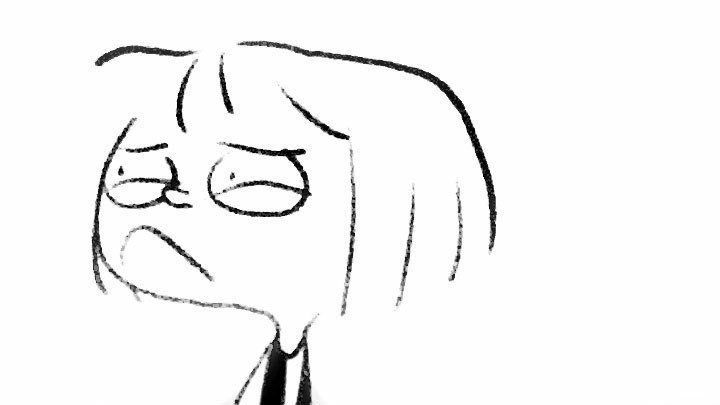
Educational activity based on the short film Sisters
Identify and express your emotions and feelings by regulating them.
Value yourself and be capable of listening and empathy.
Develop discernment and critical thinking skills.
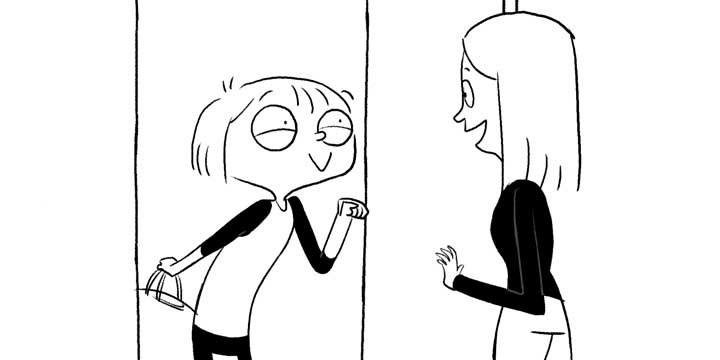
Sisters © Anchi Shen
TitleSisters
ThemeFamily relationship, Communication
Genre & keywordsComedy, friendship, sister, parental relationship, telephone
Age (for the film)6-11 years old
Duration01 min 32 s
DirectorAnchi Shen
MusicChi-Hsuan Chia
ProductionCalarts (United States, 2014)
Discuss, imagine, write and act out a frustrating situation together.
This activity can be seen as a development of the psychological aspects of the film, to introduce the bases of moral questioning: understanding one's own feelings and desires, reading similar ones in others, recognizing situations where they do not coincide.
It can begin with a detailed analysis of the emotions shown by the two characters and a discussion on the possible explanations for their discrepancy (excitement, disappointment, annoyance, anger, sadness for the little one, impassivity and surprise for the older one). This can take the form of writing work to imagine the thoughts of the characters, alternating with moments of sharing and discussion, to fully explore the symmetry (in law) of the two points of view.
Secondly, we will focus on the context of the “conflict” in the film: the expectations of the family reunion, the role of the telephone. Here again, it's about digging into the situation to imagine the habits or implicit rules (would the situation have been different if the little sister just wanted to ask a question? why doesn't she interrupt her big sister's phone call? etc.). This is an opportunity to make the link with a pragmatic questioning about the rules of politeness, child/adult hierarchies, rules for using objects, etc.
After this clearing, the time comes to construct short sketches with two characters, reusing the ideas discussed. The children formulate half a dozen situations to play without accessories and without words. At this stage, the teacher can suggest a role reversal: it is the child who is absorbed in a task and the adult who tries to communicate something to him. The children work in pairs, either by writing beforehand or, preferably, by improvisation. Then they present to the class.
To prepare for the activity, you should try to keep in mind the difference between historical/social questioning and ethical/moral questioning. The exploration of situations should therefore stop before social issues, in particular the role of frustration as a central theme of education. The debate on this subject, which is a recent historical construction, is not really relevant here. It is above all a matter of having children manipulate notions such as the vocabulary of emotions, divergent logics of behavior, the exchange of roles, the simulation of a debate, etc...
Extension and references
Activity sheet written by: Bruno Pellier