Educational activity based on the short film Two tea two
Carry out a structured text-writing process.
Identify the defining features of different text types: dialogue.
Two tea two © Decovocal
TitleTwo tea two
ThemeFriendship
Genre & keywordsExperimental, woman, Coexistence, past
Age (for the film)9-11 years old
Duration03 min 08 s
DirectorHiroco Ichinose
ProductionDecovocal (Japan, 2010)
A dialogue between one person's present and past selves.
This short film is very original but quite complex. A young woman meets herself in the past. But what can she possibly say to herself? Ask students to brainstorm ideas and imagine the dialogues. One might imagine she is trying to avoid repeating certain mistakes...
First, you will need to unpack the story which is not easy to understand. Show the film to the children and let them express themselves at first without explaining it to them. What did they understand from this short film? Whole-class discussion to make sense of the story. Some parts are subject to interpretation. Plan several viewings and feel free to use freeze-frames. Give the necessary explanations.
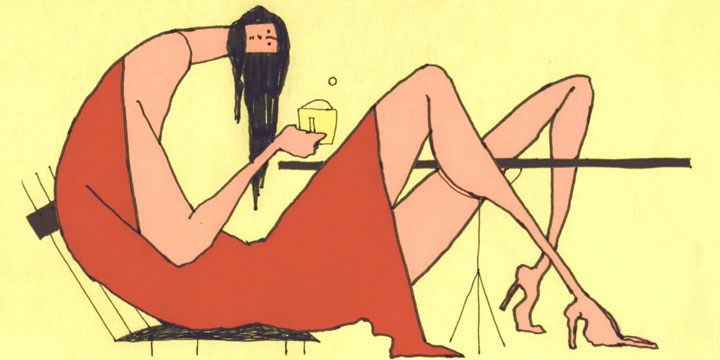
At the start, we hear an alarm clock. The woman gets up, she changes shape. We hear a door slam, we assume she is leaving her house. We find her in a cafe. And then something strange happens: a form that seems to come from the sky approaches her: it’s her double! This is the first meeting between the woman of the present and the woman of the past. They talk to each other but what do they say to each other? They seem very relaxed. They see each other several times; At one point one of them seems to have aged. What does the two-headed woman represent? Everyone can give their interpretation. It’s as if the two women were one, as they in fact are, but with two heads, one for the present and one for the past perhaps!? What is the little insect doing there? What if it was all just a dream? At the beginning of the film, she gets out of bed, opens a door, which she closes at the end of the film...
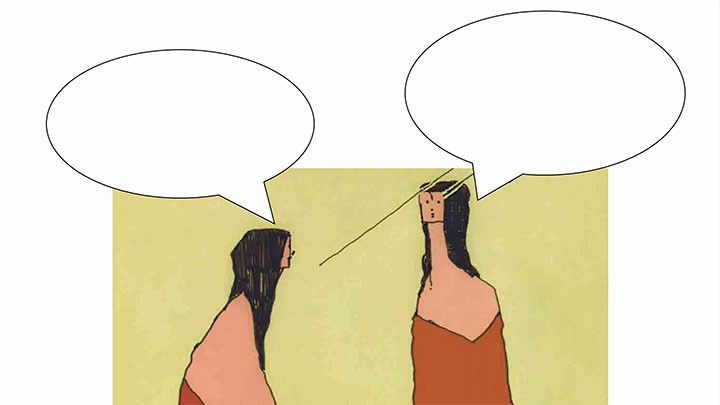
Then move on to writing. Give the children several pictures (printable materials). They will have to write the dialogue between the characters in the speech bubbles. For students who write a lot and who have imagination, the work can be continued on a plain sheet of paper using dashes. Everyone will present their work to the class. We can compare the different ideas and dialogues written for the same image.
Finally, ask the children to write new dialogues about themselves. If they could speak to their past selves, what would they say? And in the future? To do this, they can fill in the printable worksheet provided (in the boxes, add a photo or draw a self-portrait and write the dialogues in the bubbles) then have them write on a separate sheet if some pupils want to develop their ideas.
Activity sheet written by: Valérie du blog Val 10. Discover the Val 10 blog...