Educational activity based on the short film Un carré pour la Biodiversité
Learn about the characteristics of the living world, its interactions and its diversity. Communicate orally and in writing, developing precise and rich vocabulary.
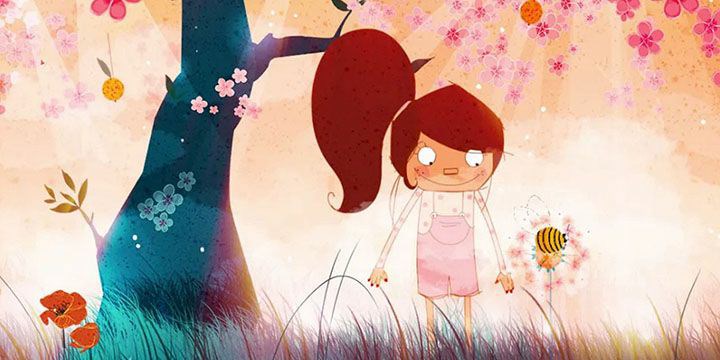
Un carré pour la Biodiversité © CPIE du Périgord-Limousin
TitleUn carré pour la Biodiversité
ThemeEcology
Genre & keywordsNarrative, biodiversity, garden, nature protection, flora, animal species
Age (for the film)3-11 years
Duration05 min 45 s
DirectorMorgane Boullier
MusicSébastien Dan
ProductionCPIE du Périgord-Limousin (France, 2015)
Understand how living things interact in nature.
The short film may be an opportunity to address the existence of living species that scientific research has not yet fully explained and then to invite children to invent imaginary animals or plants with surprising behaviors.
Why not start with the extraordinary story of the little liver fluke!
Small flukes (Dicrocoelium lanceolatum) have devised one of the most extraordinary life cycles of all parasites: They lay their eggs in the liver of sheep and the eggs, once in the droppings, are eaten by snails. The eggs then develop into larvae and then, expelled by the snails, are eaten by ants in whose nervous systems they encyst. The muscles of the ants' mandibles are then paralyzed and the helpless ants stay clamped onto the blades of grass they were eating. So the sheep eat the grass, and with it the ants, and with them the little flukes! More information on the small liver fluke on Wikipedia...
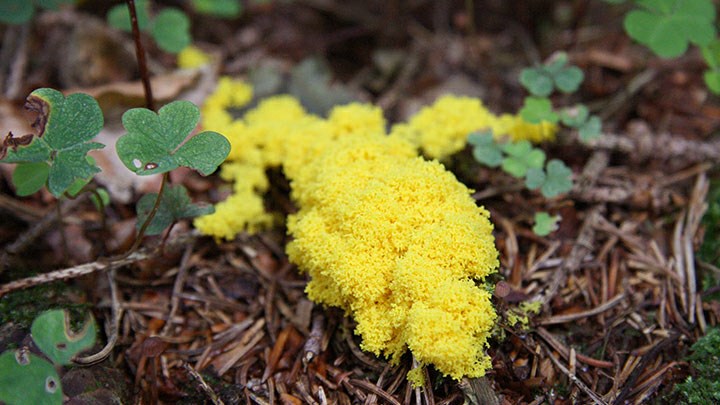
Why not also introduce students to the blob (Physarum polycephalum), neither plant, animal, nor fungus, capable of moving, without a brain but with memory. Consult a CNRS article on Physarum polycephalum...
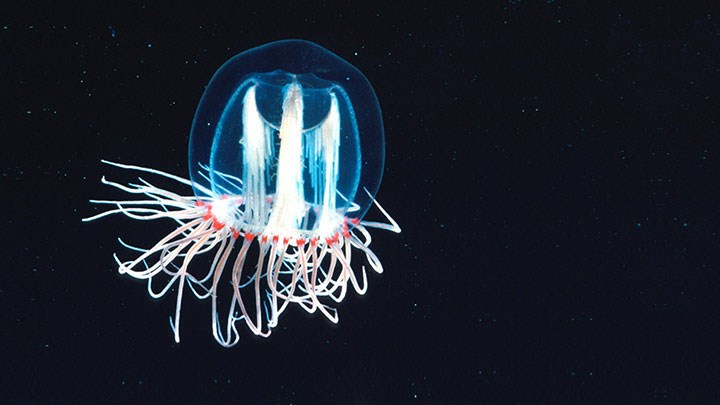
Or the immortal jellyfish (Turritopsis nutricula), capable of renewing its cells like other jellyfish, but also capable of reversing its aging process indefinitely. More information on Turritopsis nutricula on Wikipedia...
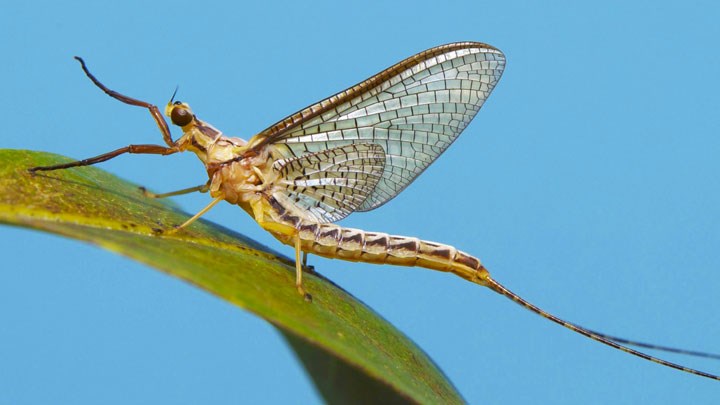
Did you know that mayflies only live a few hours but are considered the oldest winged insects on the planet?
Now it's time for the children's imagination!
Activity sheet written by: Christophe Defaye