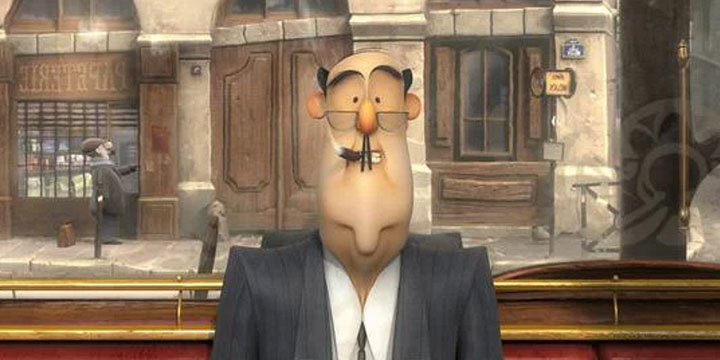
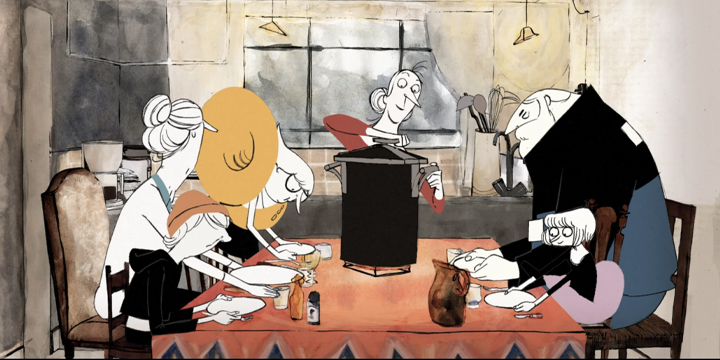
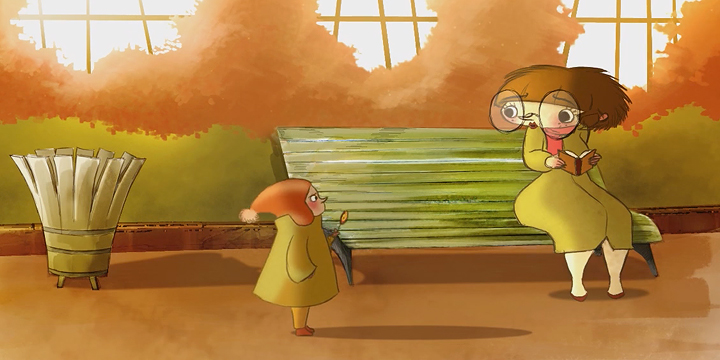
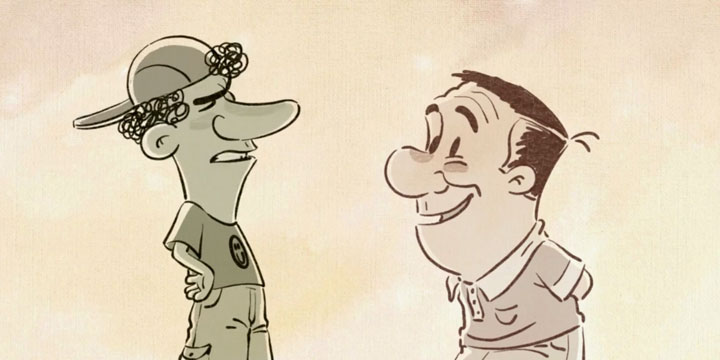
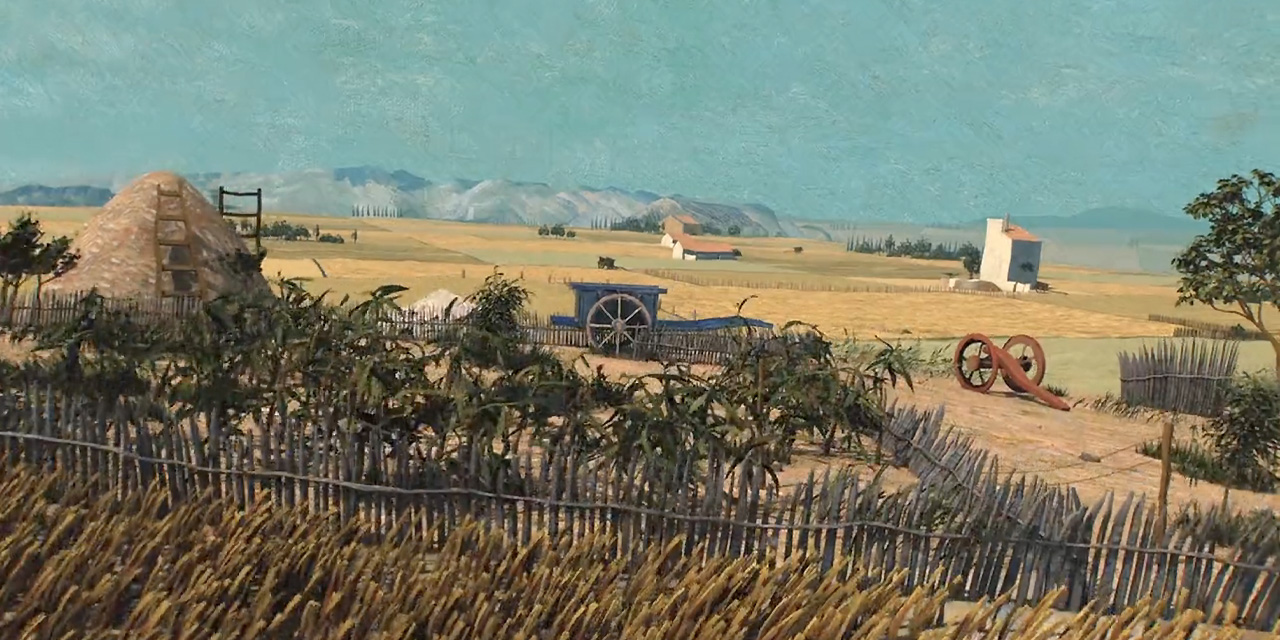
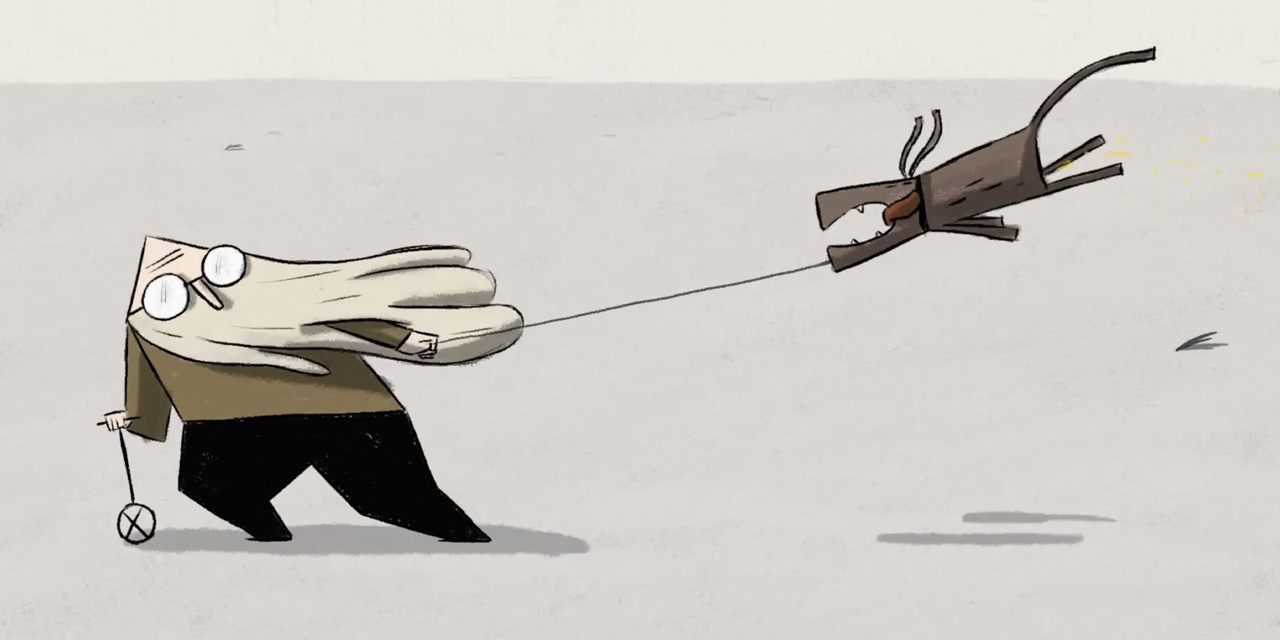
A very entertaining short film set in the atmosphere of 1960s Parisian cafés, inviting us to reflect on appearances, which can sometimes be deceptive.
The short film “French Roast” was selected at the Takorama 2021 festival organized by the Films pour enfants association.
First describe the appearance of the characters and then what they are in reality.
1-The appearance of Gaspar, the homeless man.
Old clothes, disheveled hairstyle: he seems poor, without money.
He seems gruff, grumpy, grumpy, wild. He's a little scary.
2-The appearance of Walter, the businessman, restaurant customer.
Well dressed and well-groomed: he seems rich.
He seems serious, severe, haughty, sure of himself. It expresses confidence.
3-The appearance of Sister Marie Madeleine.
She seems kind, gentle, harmless.
4-Explain the scene at second 50 of the film.
The homeless man asks the restaurant customer for money, but he refuses and hides behind his newspaper.
5-What happens at 1:20?
The customer seems to have forgotten his wallet.
6-What does he decide to do?
He decides to act as if nothing had happened and recommends cafes.
7-For what ?
He doesn't dare tell the cafe waiter that he has no money.
8-What happens at 2:55?
The homeless man asks the nun (good sister) for money who happily gives it to him. We understand that she has a lot of money in her bag.
9-What does the customer decide to do?
He tries to steal the nun's money.
10-What is the policeman doing in the restaurant?
He comes to post a wanted notice for a thief. On the poster, the thief is masked.
11-What does the customer discover when he manages to open the nun's bag?
He discovers the thief's mask.
12-What is the policeman thinking at this moment?
He thinks the mask belongs to the customer and therefore he is the thief.
13-But, in fact, what is it?
The mask was in the nun's bag: she was the thief.
14-What happens at the end of the film?
The customer cannot pay the bill and begins to cry. The homeless man finds a ticket and pays the bill for him.
15-Express the differences between how the characters look and what they really are.
The businessman seemed serious and confident; but he did not dare to admit that he had forgotten his wallet and he is ready to steal money.
The homeless man seemed mean; but, even though he needed money, he did not hesitate to give what little he had to save the businessman from his situation.
The nun seemed gentle and harmless; but she is actually a thief.
16-And is appearance important to you?
Open response/debate.
17-Make a summary of the film.
On the terrace of a Parisian bar, a man smoking his cigar refuses alms to a beggar. But when the time comes for the bill, stress sets in: no more wallet. What to do?... until an old lady gives the beggar a note taken from a bundle which she places in her bag. The temptation is strong to help yourself from the lady's bag. Are thieves the poorest? What if it were completely different? The old lady is in fact a bank robber and the most honest and generous old beggar of all.
Extensions and references
1- Literature
- Le Tartuffe, Molière, 1669.
2- About appearances
Appearances are sometimes deceiving. What if we misunderstand others most of the time? Can't the thick brute have a tender heart? Can't the poor show more generosity than the one who knows no need? Appearances often guide our behaviors of distrust or attraction; they are often far from reality and mislead our judgment.
All lessons contribute to the formation of judgment, the development of self-confidence and respect for others. They help to awaken a sensitivity that allows us to go beyond appearances. Appearance is important in many ways, but it is often distorted by our judgment, our emotions or our experiences.
Does appearance really matter? The objective of this course is to give rise to reflection on the way we see others. Our society places great importance on image. Our idea of others begins with their appearance. Getting out of this straitjacket which sometimes erases our feelings, our sensitivity to better understand and accept others is at the heart of this idea of “living well together”: tolerance, respect…
- Suggested educational activity: becoming the character in the story
“French Roast” is the short film which refers to a classic of the genre: the detective or thriller. Appearances are obviously at the heart of the plot. The suspect is never the designated culprit. And the perception of the characters changes during the story which generates intrigue and suspense. A well-constructed storyline and characters who turn out to be more complex than they appear are the keys to the success of this type of film. The sequence proposed in French is above all a writing work preceded by a detailed study on the complexity of the characters, on what they show and what they really are. These characters must appear gradually during the narration for a more sustained plot.
The activity is based on the evolution of the spectator’s perception of the characters. It has two main objectives: understanding the structure of the story and producing descriptive text.
1- Watching the short film “French Roast”. Oral discussion and questioning phase around the film: summarize the story, find the scenario and identify the significant events as real turning points in the plot. Find the skeleton of the film, the plan of the scenario, the chronology.
2- Identify the different characters. In groups, create descriptive sheets of the latter, presenting their physical and moral characteristics. Organize a class group exchange.
3- Orally, put yourself in the place of the characters and imagine how they experience their situation in this context.
4- Writing project: choose a character and write what they feel, what they see. Putting yourself in the character’s place allows interpretations of the story to emerge that can provoke an interesting debate.
Educational activities proposed by Patrice Rocas.
Created with the support of the French Ministry of Education and the French National Center for Cinema and Animated Images (CNC).
Watching the film with the family, educational activities with parents at home and with teachers in class.