A short film inspired by real events, a good way to explore the theme of pollution.
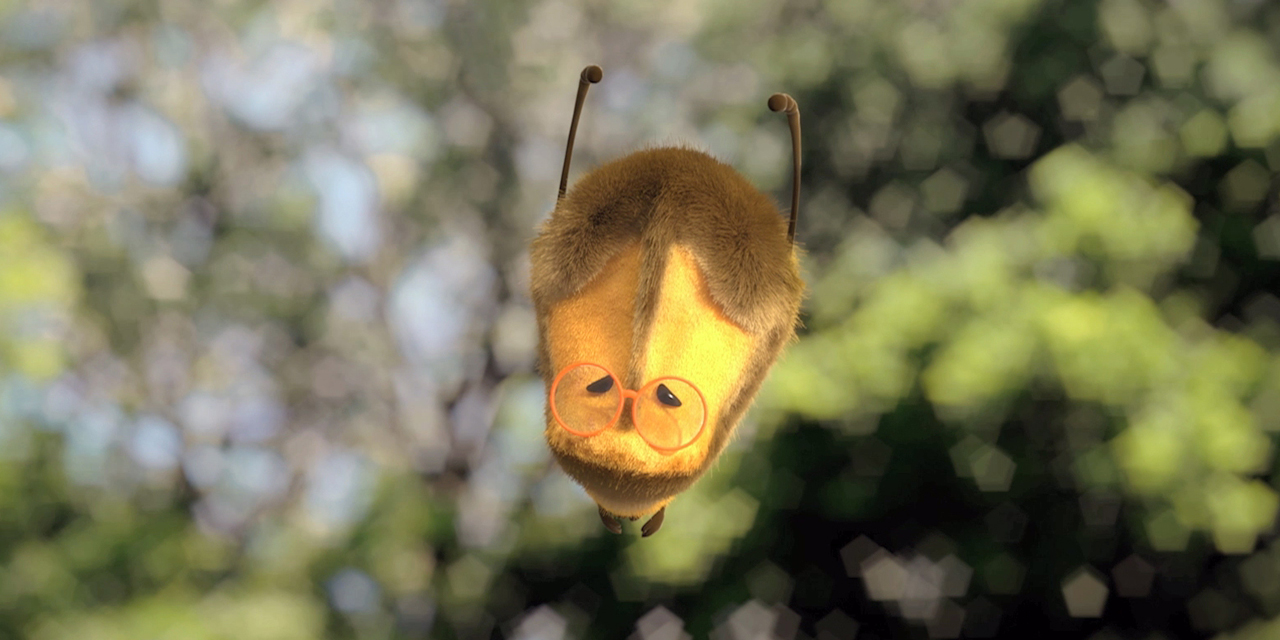
1-Why does the bee with glasses, the heroine of the film, cough?
She is allergic to pollen.
2-What is the consequence of his cough?
It is rejected by all the other bees. She is banned.
3-What will she discover?
She discovers a blue liquid that seems to be able to replace pollen.
4-What the bee discovers, is it a natural or artificial liquid? How do we understand the nature of this liquid?
We discover a broken bottle which has let the blue liquid escape; it is therefore an artificial liquid produced by men.
5-What happens when the other bees decide to forage on the blue liquid?
Everything seems to fit perfectly at first and the bees decide to replace the pollen with the blue liquid. Unfortunately, later, the blue liquid turns out to be unsuitable at all and the bees die one after the other.
6-What is the film about?
Industrial pollution.
The film features bees poisoned by an industrial product.
A text states at the end of the film: “In 2012, a dozen beekeepers from Haut-Rhin harvested a strange blue honey. This surprising discovery raised many questions. The bees had gathered residue from industrial dyes stored outside a factory. These products were intended for our food consumption. Hive poisoning blocked the laying of queens, thus ending the lives of thousands of bees. This disturbing affair, curiously, was barely heard of. »
7-What do you think about the influence of human activity on the animal and plant world?
Open response/debate.
Extensions and references
1- About bees and honey
- How do bees make honey?
Bees are the only ones who know the recipe for honey! From the flower to the hive, a very special technique.
The bees gather nectar from flowers and honeydew, mix everything in their crop (small pocket before the intestines) then pass it through the crop of another bee; from bee to bee, the mixture is enriched and transformed into honey!
The bees will regurgitate and deposit the honey in the cells of the hive. They will also have to beat their wings vigorously to dry the honey, then secrete strips of wax to build new cells and close those containing the dried honey which will serve as food for the larvae and bees during the winter.
Did you know that a worker only produces 10 grams of honey during the 5 to 6 weeks of its existence?
The bees used for the production of honey are domestic (or social) bees; but there are more than a thousand species of wild bees. 90% of wild bees do not have a queen; they are solitary and work for themselves. They do not produce honey; the nectar gathered and mixed with the pollen is only used to feed the young bees. The solitary bee makes its nest in the earth, a stem, dead wood and prepares food for future larvae before disappearing.
- For information
Bees, like wasps, sting when they feel threatened; the difference is that, at the time of the sting, the harpoon-shaped stinger of the bees remains planted in the stung skin; in escaping, as shown in the last scene of the short film, the bees lose part of their abdomen without which they cannot live.
The wasp's stinger is smooth and does not remain stuck in the skin; the wasps can therefore escape without problem, continue to live and sting!
The bee does not sting for pleasure but to defend the colony and ensure the survival of the species.
As with mosquitoes, only females (workers) bite; Male bees do not have stings.
Educational activities offered by Christophe and Olivier Defaye.