Educational activity based on the short film Dripped
Carry out plastic production individually or collectively
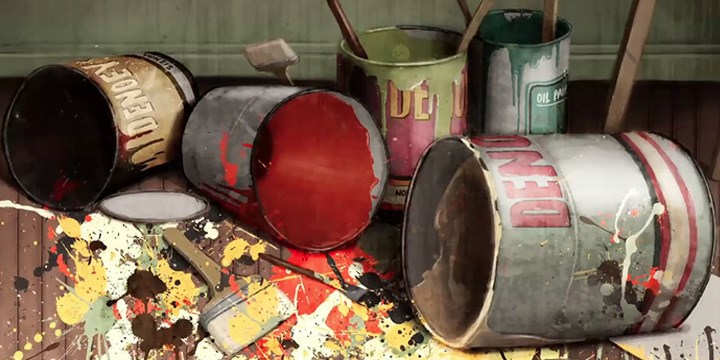
Dripped © Eddy
TitleDripped
ThemePainting
Genre & keywordsComic, Jackson Pollock, abstract expressionism, museum
Age (for the film)6-11 years old
Duration8 min 22 s
DirectorLéo Verrier
MusicPablo Pico
ProductionEddy (France, 2010)
Create a new pictorial universe.
This short film is the perfect opportunity for students to experiment with dripping, an artistic technique which consists of letting the paint fall drop by drop and superimposing the colors. students will understand that, far from being a messy and hazardous job, dripping requires a set of preliminary artistic choices essential to the quality and originality of the result.
The activity can be carried out in 4 stages.
1- After watching the film, question the students. Do you recognize any paintings that appear in the films? Why does the main character eat paintings. How does the main character invent a new artistic technique?
2- Present the work of Jackson Pollock Explain that his paintings are not disordered but on the contrary they are the result of a very particular artistic research and the desire to create a new pictorial universe. Jackson Pollock has an overall idea of his painting before starting and he perfectly masters his sometimes very delicate gesture. The brush does not touch the canvas, the paint falls drop by drop. Jackson Pollock invents a new technique but also changes the position of the hand and the gaze of the artist who paints his picture. The canvas is on the ground and the artist, above, overlooks his painting. it's a bit like he was in his painting.
To better understand the dripping technique, watch the video offered by the Museum of Modern Art, New York (MoMA): How did Jackson Pollock paint?
3- Ask the students to experiment with dripping themselves Materials for this activity: a large white sheet on the floor, brushes and pots of paint.
In the classroom or in the schoolyard, alone or in a group. For class organization reasons, students can take turns practicing dripping and create a single painting together.
Ask the students to make a drawing plan before starting.
Who paints what? Paint slowly or quickly? In the center of the painting or on the edges? Lines, drops? Straight or sinuous shapes? Superpositions of colors and shapes?
Once the picture is painted, ask students (orally or in writing) to describe what they did, their initial artistic intentions and the result.
4- Please note Jackson Pollock's paintings are among the most expensive in the world: the painting "Number 17A", produced in 1948, was purchased for 180 million euros during a private sale in 2016. To the question "why?" everyone can do it right? ", explain that Jackson Pollock was the first to develop this technique which greatly influenced subsequent generations of artists who might not have been the same if Jackson Pollock had never existed.
Activity sheet written by: Christophe Defaye