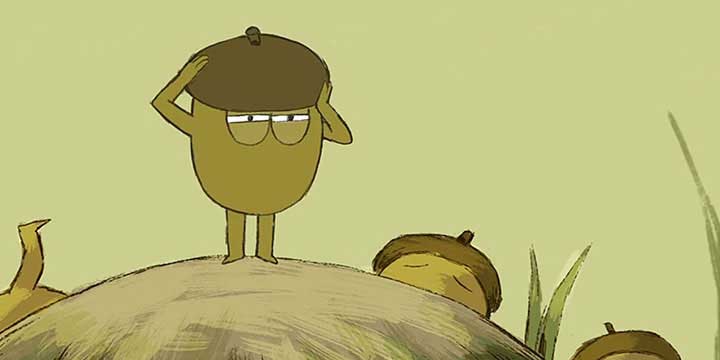
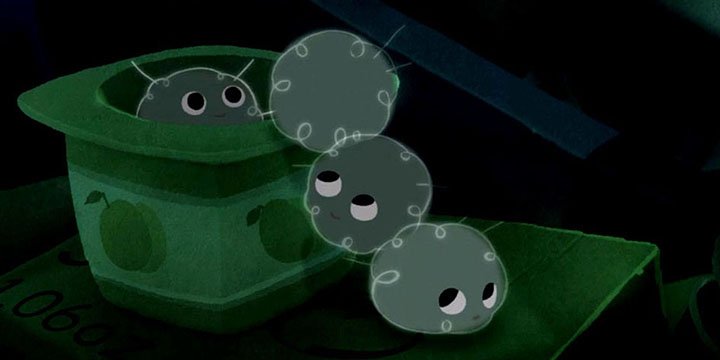
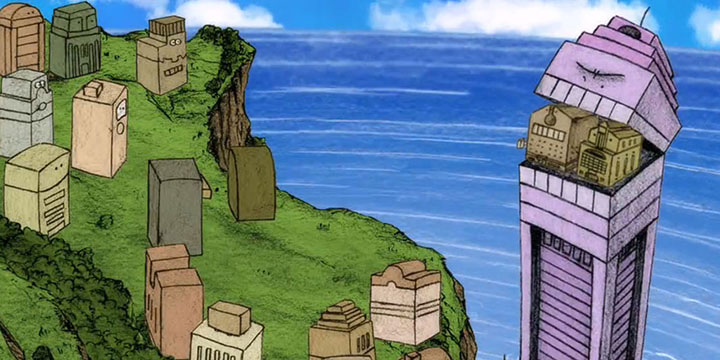
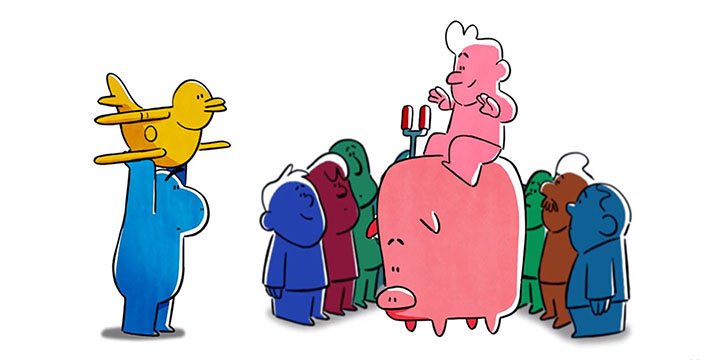
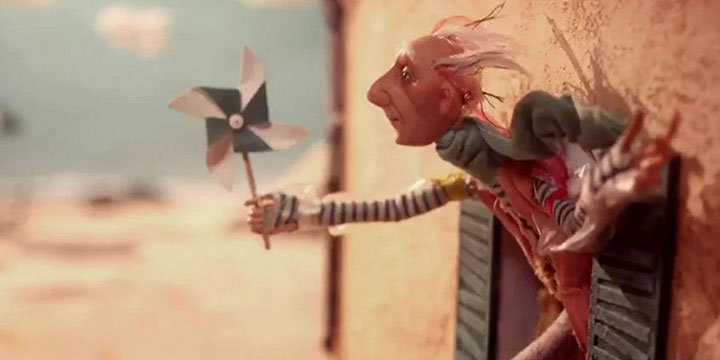
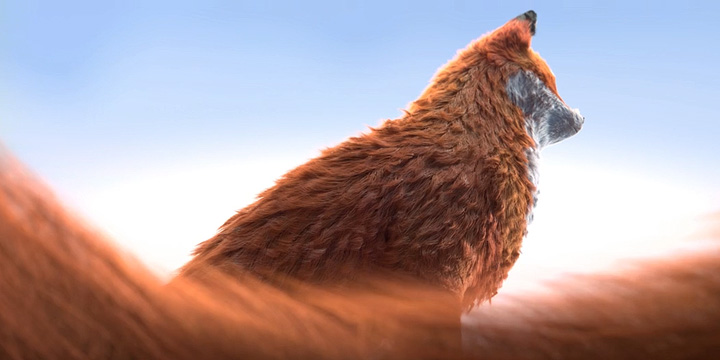
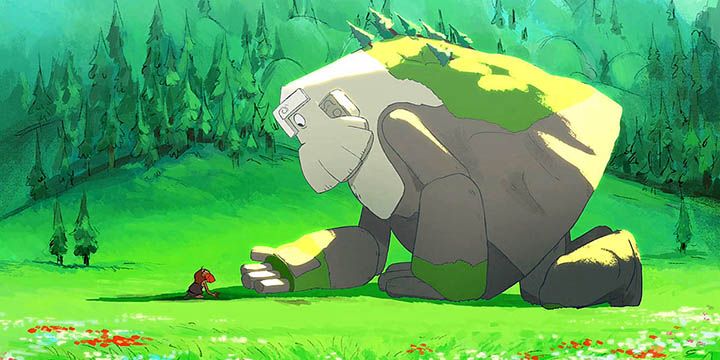
The metaphor of seasonal artisans will be a lot of fun for young children as well as older ones. Imagine in class with the students, characters representing the 4 seasons, Mr. Lemon or Melon for spring, Mrs. Currant or Hazelnut for summer. Invent the tools to cultivate their garden. Wind, rain, sun, bees?
For teachers often on the lookout for a book about the seasons, this short film is a lovely teaching resource to present the four seasons to students from kindergarten onwards.
The short film “Automne” was selected for the Takorama 2022 festival organized by the Films pour enfants association.
1-Where does the film take place?
It is a library but also a workshop.
2-Who is the main character?
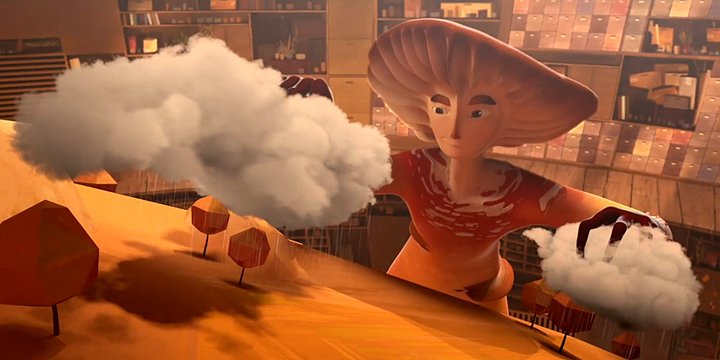
It's a mushroom.
3-What does this character do in the film?
He makes a season.
4-What is this season? How do we recognize it?
It's autumn. We understand it by the colors that the character uses, but also by the elements that he makes, such as red leaves, chestnuts and mushrooms.
5-What is the relationship between the character and the season he is creating?
Mushrooms mainly grow in autumn.
6-Who is the character who appears at the end of the film?
It’s Mr. Winter; he wears a snow-white coat.
7-Why does he arrive after Mr. or Mrs. Mushroom (or Autumn)?
Because winter is the season following autumn.
8-What do you think Mr. Winter will make?
Open response.
He will certainly make all the elements that make up winter: snow and maybe even Christmas trees!
9-Why does the character Mushroom regularly look at the clock?
He looks at the clock because he is afraid of not finishing his work on time: he must be on time to make room for the next season, winter.
10-What could we call the location of the film?
The seasons workshop.
11-Compare fall and winter characters.
The winter character is scary. He is dressed as Death in many depictions of the Grim Reaper. The two characters are in total opposition. He certainly has little fir trees on his shoulder, but they look more like spiked weapons.
Extensions and references
1- Discovery of autumn
Activity proposed by Mistress Aurel.
- Discover and identify a season and its characteristics: autumn.
The short film allows students to discover a particular season, which marks their return to class each year: autumn. Its natural characteristics, observable by all, are presented in a poetic way through an anthropomorphic mushroom acting on the Earth like a sculptor who shapes his work.
Activity stages. Collect students' reactions and question them if necessary: where does the short film take place? (in a library, bring the name “workshop of the seasons”); who is the main character? (a mushroom, bring the name “Mr. Mushroom”). Present the character card as a reference image, then the clock card, leading the students to think about its hand, its colors, its four parts. If necessary, explain that it is a seasonal clock. Finally: why does Mr. Mushroom regularly look at this clock? (because it must be on time and make way for the next season, winter). Make the connection with the character who arrives at the end of the short film.
Research. Offer the students a second viewing where they will have to concentrate on different elements, in groups of observers each responsible for a single theme: the actions of Mr. Mushroom on the planet, the effects of these actions on the planet, the appearance of the clock.
Pooling. Using the different story element cards, to manipulate or display on the board, display Mr. Mushroom's actions in chronological order. Associate with each act the effect produced on the Earth. Place the three clocks in the right place on the chronological sequence of actions.
Application possible. Exercise sheet based on sequential images to put in order, to keep track of the different characteristics of autumn: imagine the elements of autumn and the actions of Mr. Mushroom, memory cards of the characters and the clock, “sequential images of the elements of autumn” activity.
2- French, English, plastic arts
- Invent characters.
The metaphor of the artisans of the seasons will amuse children a lot.
Imagine characters in the image of the four seasons: Mr. Lemon or Melon for spring, Mrs. Currant or Hazelnut for summer. Invent their tools to cultivate their gardens: the wind, the rain, the sun, the bees…
Present your character at work to the class, in text and drawing.
3- French
- Personify objects, understand the principle of personification.
Personification is a figure of speech which consists of attributing human characteristics to an animal or an inanimate thing (concrete object or abstraction) that we make want, speak, act, etc.
In the film, the mushroom, personified, shapes autumn.
Ask children to personify objects from our daily environment, such as a fork or a broom, then invent a story and imagine the emotions of these new characters.
Jean de La Fontaine uses terms in his fables relating to both animals and men: animals are personified to represent human society; thus, the lion becomes an allegory of power, and the fox, of cunning.
Personification can be approached in the form of games and quizzes.
“The mistral was angry, and the bursts of its loud voice kept me awake until morning. »
Letters from my mill, Alphonse Daudet (1840-1897).
4- The representation of the seasons
- The representation of the seasons in film and in art history.
What did the authors choose to personify the seasons? What impressions does this create?
How has this theme of the seasons been traditionally represented in painting?
The Four Seasons d'Arcimboldo in the 16th century, and the illustration miniatures of the calendar of Very Rich Hours of the Duke of Berry, Paul de Limbourg and his brothers, first quarter of the 15th century.
Educational activities offered by Christophe and Olivier Defaye, with the advice of Anne-Marie Filho.
Created with the support of the French Ministry of Education and the French National Center for Cinema and Animated Images (CNC).
Watching the film with the family, educational activities with parents at home and with teachers in class.